Methamphetamine contamination is one of the most significant risks facing New Zealand property investors. WorkSafe NZ provides guidance on managing contamination risks. A single contaminated property can cost tens of thousands in remediation, void your insurance, and render your investment uninhabitable. With new regulations taking effect in 2026, understanding this issue is more important than ever.
Understanding the Contamination Levels
Not all meth contamination is equal. The key distinction is between properties where meth was manufactured versus where it was simply used.
Manufacturing Contamination
When methamphetamine is manufactured in a property, highly toxic chemicals permeate walls, ceilings, carpets, and soft furnishings. These chemicals can cause serious long-term health issues for occupants including respiratory problems, skin irritation, and neurological effects.
Remediation for manufacturing contamination is extensive and expensive, often requiring removal and replacement of affected structural materials, insulation, and carpets. Costs typically range from $20,000 to over $100,000 depending on the extent of contamination.
Use Contamination
Properties where meth has been smoked but not manufactured also become contaminated, though typically at lower levels. The residue settles on surfaces and can affect air quality. While less severe than manufacturing contamination, use contamination still requires professional cleaning and may affect tenant health.
Remediation for use contamination is generally less expensive, typically ranging from $5,000 to $15,000, but this still represents a significant unexpected cost for landlords.
Current Testing Standards
Following the 2018 Gluckman Report, the practical standard for methamphetamine contamination in New Zealand was revised significantly. The current accepted threshold is:
| Contamination Level | Micrograms per 100cm² | Action Required |
|---|---|---|
| Below 15 | < 15 µg/100cm² | No action required for use contamination |
| Above 15 | > 15 µg/100cm² | Professional assessment and remediation needed |
| Manufacturing indicators | Much higher levels + chemical markers | Extensive remediation required |
The 15 micrograms per 100 square centimetres threshold is the level below which a property is considered safe for habitation without remediation. This represents a significant change from the earlier 1.5 µg standard, which was found to be overly conservative and led to unnecessary remediation costs.
2026 Regulatory Changes
From mid-2026, new methamphetamine testing regulations will apply to all rental properties. These changes introduce mandatory testing requirements in certain circumstances, standardised testing procedures that landlords must follow, disclosure obligations when selling contaminated properties, and specific tenancy agreement provisions regarding testing and remediation.
The regulations aim to provide clarity for landlords, tenants, and property buyers about contamination status and responsibilities. This represents a significant shift toward greater landlord accountability.
Testing Options and Costs
Three main testing approaches are available, each suited to different situations.
DIY Screening Tests
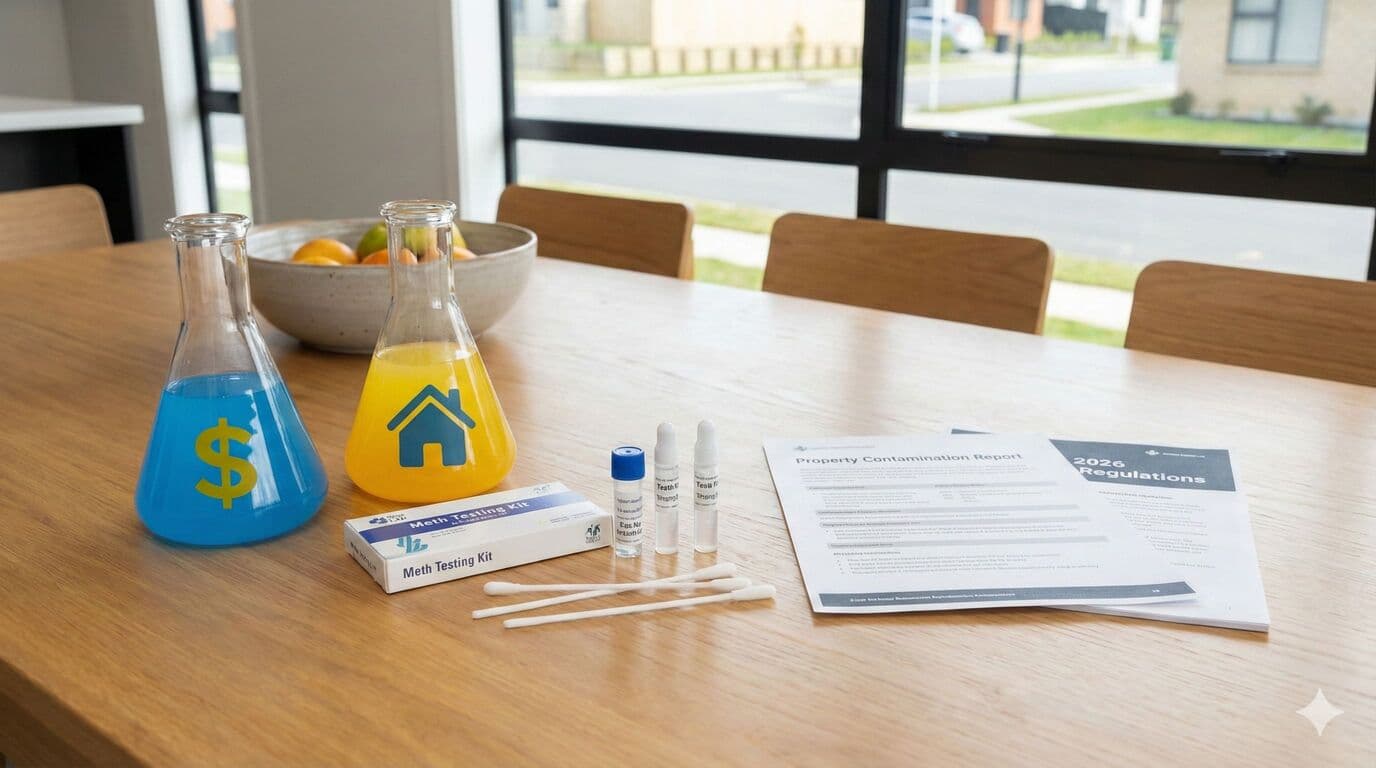
At-home meth testing kits are available from hardware stores and online retailers for $30-80 per test. These offer quick, affordable initial screening but are not as accurate as professional testing and may produce false positives or negatives. They are best used as an initial check-if results are concerning, always follow up with professional testing before making decisions.
Professional Composite Testing
A technician takes multiple samples from around the property and combines them for laboratory analysis. This costs $300-600 and provides more accurate, documented results than DIY kits. However, composite testing does not identify specific contamination locations within the property. This is the standard approach for routine pre-purchase or end-of-tenancy testing.
Detailed Sampling
Individual samples are taken from multiple locations to map contamination levels throughout the property. This costs $600-1,500 or more depending on property size. Detailed sampling identifies contamination hot spots and patterns, making it essential for remediation planning. This level of testing is required when contamination is detected and remediation is needed.
When to Test
Landlord Testing Requirements
At minimum, landlords should test between every tenancy. You should also test if you suspect drug activity, before purchasing any investment property, after extended vacancies, and when tenants exhibit unusual behaviour or neighbours report concerns.
Buyer Due Diligence
If you are purchasing an investment property, always arrange testing before settlement. Include testing as a condition in your Sale and Purchase Agreement and never rely solely on vendor assurances-always obtain independent testing.
High-Risk Situations
Holiday rentals and baches present particular risks because remote locations with short-term tenants are prime targets for temporary meth operations. Test these properties more frequently than standard rentals.
Properties with high tenant turnover carry increased risk simply because more people have occupied the property. Consider testing after each tenancy rather than waiting.
While lower socioeconomic areas are statistically higher risk, contamination can occur in any property regardless of location or value. No property is completely immune.
Insurance Implications
Most standard landlord insurance policies have significant limitations on meth contamination cover. Policies typically cover remediation costs up to policy limits (often $30,000-50,000), loss of rent during the remediation period, and some cleanup costs.
However, several important exclusions commonly apply. Contamination that occurred before your policy started is not covered. If you cannot demonstrate regular testing, your claim may be declined. Consequential losses beyond policy limits are excluded. Some policies specifically exclude manufacturing contamination entirely.
Check your specific policy wording carefully. Some insurers require documented regular testing as a condition of cover. If you cannot prove you have been testing regularly, your claim may be declined regardless of other factors.
What to Do If Contamination Is Found
If testing reveals contamination, remain calm. The situation is serious but manageable with proper handling.
Commission professional detailed sampling if initial screening shows contamination. You need to understand the full extent and likely source before making decisions about remediation.
Notify your insurer promptly. Delaying notification can void your claim entirely, so report the contamination as soon as you have confirmation.
Engage only qualified remediators who follow NZS 8510 remediation standards. Get multiple quotes before proceeding as costs can vary significantly.
Document everything throughout the process: photographs, test results, remediation quotes, and all correspondence. This documentation protects you in insurance claims and any potential legal disputes.
If the property is currently tenanted, you have obligations to inform tenants of health risks. Seek legal advice on the appropriate approach.
After remediation is complete, independent clearance testing must confirm the property is below 15 micrograms per 100 square centimetres before anyone reoccupies the property.
The Remediation Process
Professional remediation follows a structured process. It begins with detailed assessment and testing to identify the full extent of contamination. Contaminated areas are then contained to prevent spread during the remediation work.
Contaminated materials including carpets, curtains, and soft furnishings must be removed and properly disposed of. Hard surfaces undergo specialised cleaning using appropriate chemicals and techniques. Where required, sealants are applied to affected surfaces to encapsulate any remaining residue.
Finally, clearance testing verifies that contamination levels are below acceptable thresholds. Only after clearance is confirmed can the property be reoccupied.
Typical Remediation Costs
| Contamination Type | Typical Cost Range |
|---|---|
| Low-level use | $5,000-10,000 |
| Moderate use | $10,000-20,000 |
| Heavy use | $15,000-30,000 |
| Manufacturing | $30,000-100,000+ |
These costs can exceed the equity in a property, making early detection absolutely crucial. A small investment in regular testing can prevent catastrophic financial losses.
Prevention Strategies
Tenant Screening
Thorough tenant screening is your first line of defence. Run credit checks and verify references carefully. Contact previous landlords directly by phone rather than accepting written references. Verify employment and income. Most importantly, trust your instincts-if something feels wrong during the application process, proceed with caution.
Regular Inspections
Conduct inspections at least quarterly, looking specifically for warning signs of drug activity. These include unusual chemical odours, burn marks around power outlets or on benchtops, unexplained staining on walls or ceilings, excessive security measures like new locks or covered windows, and tenants who try to refuse or delay inspection access. Reports from neighbours should also be taken seriously. Document the condition at each inspection with photographs.
Establish a Testing Regime
Test between every tenancy without exception. Test any properties you acquired before your ownership began. Keep detailed records of all testing for insurance purposes. This documentation could be critical if you ever need to make a claim.
Impact on Property Value and Sales
Meth contamination history affects both property values and saleability. Properties with known contamination history may sell for five to fifteen percent less than comparable uncontaminated properties. Some buyers will not consider properties with any contamination history regardless of successful remediation.
Disclosure obligations mean you cannot hide contamination from buyers-you are legally required to disclose known issues. Banks may also decline lending on properties with contamination history, limiting your pool of potential buyers.
However, a properly remediated property with clearance certification is considered safe. The impact on value and saleability diminishes over time if the property remains clean and testing continues to show acceptable levels.
Prevention Is Cheaper Than Cure
Meth contamination is a real and serious risk for property investors, but it is manageable with proper systems in place. Test regularly between every tenancy at minimum. Screen tenants thoroughly because prevention is always cheaper than remediation. Inspect frequently so you know what is happening in your properties. Check your insurance policy carefully so you understand what is and is not covered. Act quickly when problems arise because early detection limits damage and costs. And stay informed about the regulatory changes coming in 2026.
With the right approach, you can significantly reduce your risk and protect your investment for the long term.
Need Help With Your Mortgage?
Our expert advisers are here to guide you through every step of your mortgage journey. Get in touch for a free, no-obligation consultation.
Talk to an Adviser