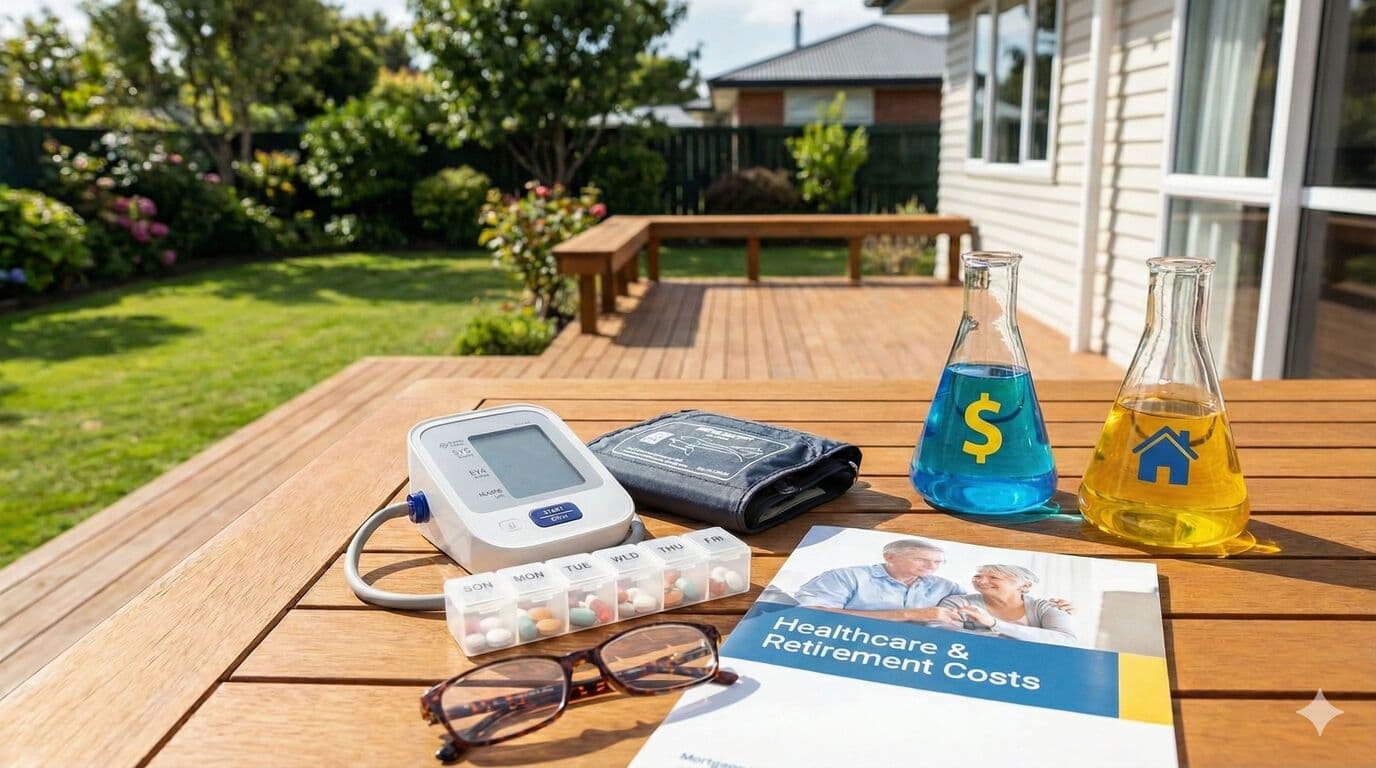
Healthcare becomes more important as you age, and potentially more expensive. While New Zealand's public health system covers major medical needs, significant gaps exist that retirees need to plan for.
What The Public System Covers
New Zealand residents receive free or subsidised healthcare for most acute and serious needs. GP visits are subsidised (though not free for most adults), while hospital treatment and emergency care at public hospitals come at no charge. Prescription medicines cost a subsidised $5 per item, and diagnostic tests and mental health services are available through the public system.
The bottom line is that you will not go bankrupt from a heart attack or cancer treatment if treated through the public system.
The Waiting Game
The challenge with public healthcare is access and timing. Non-urgent surgeries have long wait lists, and specialist appointments can take months to secure. Some treatments are rationed based on severity, and quality varies between different health regions.
If you need a hip replacement, you might wait 12 to 18 months. That is a significant period of pain and reduced mobility, and it is why many retirees consider private options for non-urgent procedures.
What Is Not Covered
Significant healthcare costs fall outside the public system, and these are the expenses you need to budget for in retirement.
Dental care
Adult dental care is almost entirely self-funded, and costs escalate with age. Routine check-ups and cleaning run $150 to $250, while fillings cost $150 to $350 each. More significant work adds up quickly: root canals run $800 to $1,500, crowns cost $1,200 to $2,000, and extractions range from $150 to $400. If you need dentures, expect to pay $1,500 to $4,000. Budget $1,000 to $3,000 per year for dental as you age.
Vision care
Public eye care is limited. Eye examinations cost $60 to $100 privately, and prescription glasses run $300 to $800. Cataract surgery is available through the public system but comes with significant wait times. Private cataract surgery costs $3,000 to $5,000 per eye.
Hearing
Hearing deteriorates with age, and addressing it is largely self-funded. Hearing tests cost $50 to $150, while quality hearing aids run $2,000 to $8,000 per pair. Some public funding is available but limited, so most retirees pay out of pocket.
Mobility and daily living
As mobility decreases, you may need walking aids ($50 to $500), wheelchairs ($200 to $2,000+), or mobility scooters ($2,000 to $8,000). Home modifications such as grab rails, ramps, or bathroom alterations can cost $5,000 to $50,000 depending on what is needed. Some funding is available through Enable or ACC if the need is accident-related.
Private Health Insurance
Health insurance can reduce out-of-pocket costs and provide faster access to treatment. Policies typically cover private hospital treatment, specialist consultations, diagnostic tests, surgical procedures, and some medications not funded publicly.
However, insurance has significant limitations. Pre-existing conditions are generally excluded, as are dental care (usually requiring separate policies), GP visits, cosmetic procedures, and long-term care.
Cost considerations
Premiums increase significantly with age. A 50-year-old might pay $100 to $200 per month, while a 65-year-old pays $200 to $400. By 75, premiums can reach $400 to $800 or more. Many insurers have age limits or significantly restrict cover for older members.
Is it worth it?
Health insurance provides value if you want faster access to treatment, can afford the premiums long-term, already have cover (since pre-existing conditions matter), and prefer the certainty of coverage. However, it may not be worth it if premiums consume too much of your retirement income, you can afford to self-insure for likely costs, or your existing health conditions mean many benefits are already excluded.
Self-Insuring
Instead of insurance, some retirees set aside money specifically for healthcare. The approach is straightforward: keep $20,000 to $50,000 accessible for medical costs, draw on it as needed, accept public system waits for non-urgent care, and pay privately only when the wait or the condition warrants it.
This works if you have sufficient savings and can accept some risk. You are essentially betting that your healthcare costs will be less than what you would have paid in insurance premiums over time.
Rest Home Costs
The big healthcare cost many people do not plan for is rest home or hospital-level care. Rest home care costs $1,000 to $1,500 per week, hospital-level care runs $1,500 to $2,500 per week, and dementia care can cost $1,800 to $3,000 per week. That translates to $50,000 to $150,000+ per year.
Government subsidies apply if your assets fall below thresholds (currently around $239,930 for a single person). The family home is generally exempt if a partner still lives there, but the rules are complex.
Many people exhaust their retirement savings paying for rest home care. This is a significant risk that is difficult to plan for, and it is worth understanding the subsidy rules before you need them.
Planning For Healthcare Costs
Effective healthcare planning in retirement means budgeting realistically (costs increase with age), maintaining health insurance if you have it and can afford premiums, building a healthcare reserve of $20,000 to $50,000 in accessible funds, and staying healthy because prevention is cheaper than treatment. You should also understand your entitlements since various support options are available, and consider rest home scenarios before you need to make decisions under pressure.
ACC In Retirement
ACC covers treatment for injuries regardless of age. If your health issue results from an accident, ACC may cover medical treatment, surgery, rehabilitation, and some home modifications. Ensure you lodge ACC claims for any accident-related conditions since this coverage does not require you to pay.
Making Decisions
Healthcare decisions in retirement often involve trade-offs: paying privately now versus waiting for public treatment, maintaining expensive insurance versus self-insuring, or treating conditions aggressively versus accepting some limitations.
There are no wrong answers, only what is right for your circumstances, finances, and values. Discuss your preferences with family so they can support your decisions if you become unable to make them yourself.
Need Help With Your Insurance?
Our expert advisers will help you find the best adviser for you. Get in touch to be connected with a professional insurance adviser.
Talk to an Adviser