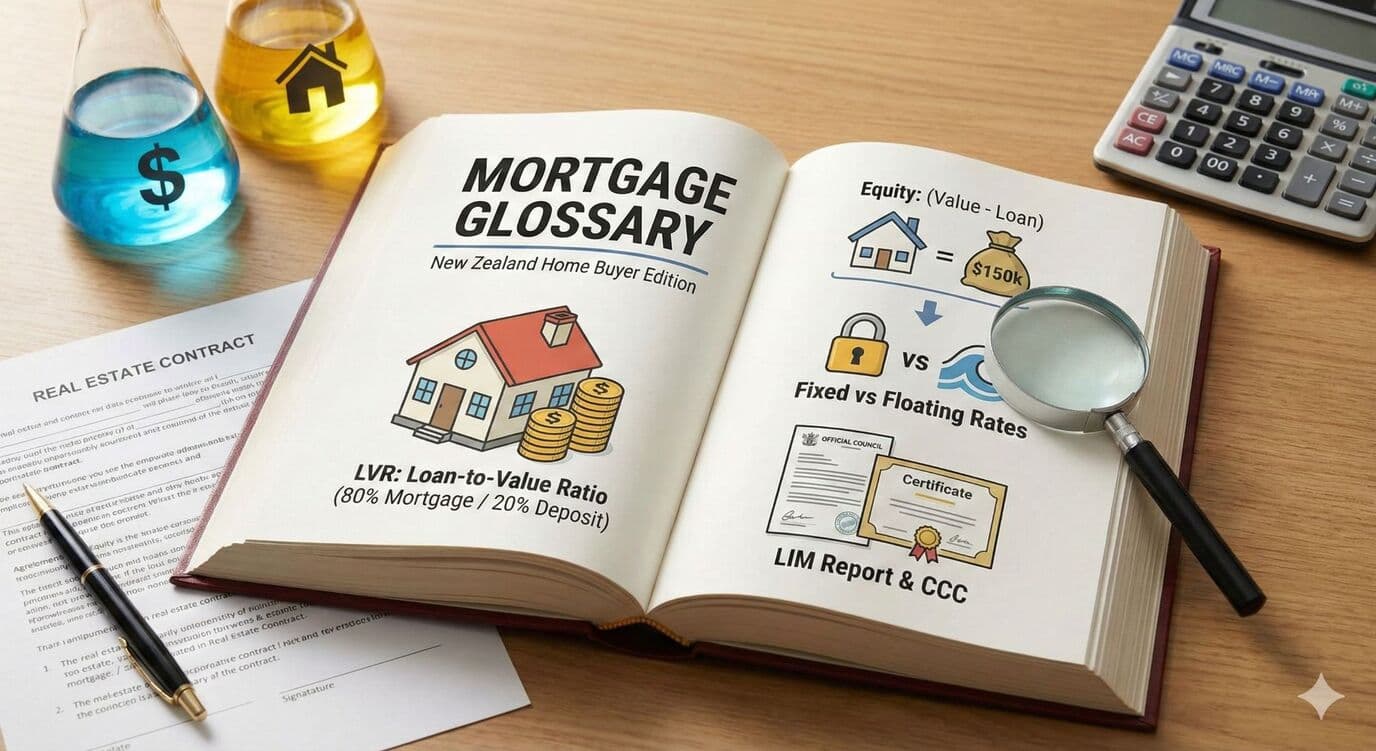
The Official Cash Rate sits at 2.50% as of 8 July 2026, after the Reserve Bank increased the OCR by 25 basis points to help return inflation to target. If you've been watching the news, you've probably heard plenty about the OCR, but what does it actually mean for your mortgage? This guide explains everything in plain English.
What Is The Official Cash Rate (OCR)?
The Official Cash Rate is essentially the "wholesale" interest rate that the Reserve Bank of New Zealand charges to commercial banks. It's the rate at which banks lend and borrow from each other overnight, and it sets the baseline for every other interest rate in the country-from your mortgage to your term deposits and credit cards.
Think of the OCR as the foundation of a pyramid. The Reserve Bank sets this rate, and all other rates are built on top of it. When the OCR changes, banks adjust their rates accordingly because their costs of doing business have changed.
The OCR is reviewed seven times each year by the Monetary Policy Committee (MPC), with four of those reviews accompanied by a detailed Monetary Policy Statement explaining the Reserve Bank's reasoning. You can add the 2026 announcement dates to your calendar to stay informed.
2026 OCR Announcement Dates
The Reserve Bank will make OCR decisions on these dates in 2026:
| Date | Type | Time |
|---|---|---|
| 18 February 2026 | Monetary Policy Statement | 2:00 PM |
| 8 April 2026 | Monetary Policy Review | 2:00 PM |
| 27 May 2026 | Monetary Policy Statement | 2:00 PM |
| 8 July 2026 | Monetary Policy Review | 2:00 PM |
| 19 August 2026 | Monetary Policy Statement | 2:00 PM |
| 7 October 2026 | Monetary Policy Review | 2:00 PM |
| 25 November 2026 | Monetary Policy Statement | 2:00 PM |
The Monetary Policy Statements include more detailed economic analysis and projections, while the Monetary Policy Reviews provide interim updates between Statements.
How Does the OCR Actually Work?
Banks hold settlement accounts at the Reserve Bank to manage their daily transactions with each other. When ANZ needs to settle a payment with Westpac, for example, money moves between these accounts.
The Reserve Bank keeps these overnight rates tightly controlled by offering two options. Banks can borrow from the Reserve Bank at OCR plus 0.25 percent, or deposit surplus funds and earn OCR minus 0.25 percent. This narrow corridor of half a percentage point keeps overnight rates stable and aligned with the OCR.
When the Reserve Bank changes the OCR, it directly affects how much it costs banks to do business-and those costs flow through to the interest rates you see on mortgages, savings accounts, and loans.
How the OCR Affects Your Mortgage Rate
Here's where things get practical for homeowners. The OCR's impact on your mortgage depends on whether you're on a floating rate or fixed rate.
Floating Rates: Direct and Fast
Floating mortgage rates are closely tied to the OCR and typically move within days of an OCR change. If the OCR drops by 0.50 percent, your floating rate will usually drop by a similar amount. The banks are borrowing money more cheaply, so they can lend it to you more cheaply too.
Fixed Rates: More Complex
Fixed mortgage rates don't move in lockstep with the OCR. That's because banks price fixed rates based on their expectations of where the OCR will be over the entire term of your loan-not just where it is today.
For example, if the OCR is 2.50 percent today but markets expect it to rise to 3.50 percent over the next two years, your two-year fixed rate will already factor in those expected increases. This is why fixed rates sometimes rise even when the OCR stays the same, or don't fall as much as you might expect after an OCR cut.
New Zealand banks also borrow money from overseas to fund mortgage lending. If overseas interest rates are rising, this pushes up the cost of fixed-rate mortgages here, even if our OCR isn't moving.
The Recent OCR Cutting Cycle
To understand where we are now, it helps to know how we got here. In 2022-2023, the Reserve Bank rapidly increased the OCR from 0.25 percent to 5.50 percent-one of the steepest hiking cycles in our history-to combat inflation that peaked at 7.3 percent.
By late 2024, inflation had returned to the target band, and the Reserve Bank began cutting rates. Through 2025, we saw a series of reductions: from 5.50 percent in August 2024, the OCR was progressively cut to 3.75 percent in February 2025, then to 3.50 percent in April, 3.25 percent in May, 3.00 percent in August, 2.50 percent in October, and finally 2.25 percent in November 2025.
These cuts have brought substantial relief. The average mortgage yield has fallen to around 5.4 percent, and with many mortgages due to refix in the coming months, the average is expected to drop further to around 4.7 percent by September 2026.
The OCR and Inflation: Why the Reserve Bank Changes It
The Reserve Bank's primary job is keeping prices stable. Under the Reserve Bank of New Zealand Act 1989, it has a mandate to keep inflation between 1 and 3 percent, with a target of 2 percent over the medium term.
When inflation rises too high, the Reserve Bank increases the OCR. Higher interest rates make borrowing more expensive and saving more attractive, which cools spending and slows the economy. Less demand means prices stop rising so quickly.
Conversely, when the economy is sluggish and inflation is too low, the Reserve Bank cuts the OCR to encourage borrowing and spending, stimulating economic activity.
This balancing act is why you'll hear economists talk about the OCR in terms of what the economy needs, not just what borrowers want. Lower rates are great for mortgage holders, but if they're too low for too long, they can fuel inflation and create other problems.
How OCR Changes Affect the Exchange Rate
OCR changes don't just affect domestic interest rates-they also influence the value of the New Zealand dollar on global currency markets.
When our interest rates rise relative to other countries, overseas investors can earn higher returns by putting money in New Zealand. This increases demand for NZ dollars, pushing our currency higher. A stronger dollar makes imports cheaper (helping contain inflation) but makes our exports more expensive overseas, which can hurt exporters.
When the OCR falls, the opposite happens. The NZ dollar tends to weaken, making exports more competitive but imports more expensive.
What the Current OCR Environment Means for You
With the OCR at 2.50 percent as of 8 July 2026, after a 25 basis point increase from 2.25 percent, here's what to consider:
If You're on a Floating Rate
You've benefited from each OCR cut with lower repayments. However, floating rates remain higher than fixed rates in the current environment. Unless you specifically need the flexibility of a floating rate (for example, you're planning to sell soon or want to make unlimited extra payments), fixing might offer better value.
If You're Refixing Soon
This is an excellent time to be refixing. With rates near their cycle lows, locking in for one or two years captures current conditions. Some borrowers choose to split their mortgage across different terms-for example, half on a one-year fixed and half on a two-year fixed-to spread their risk and maintain some flexibility.
If You're Buying a Property
Lower rates have improved borrowing capacity compared to 2023-2024. Banks test your ability to repay at higher "stress test" rates (typically around 7-8 percent), but the lower your actual rate, the more comfortable your monthly payments will be.
How to Stay Informed About OCR Changes
The Reserve Bank announces its OCR decisions at 2pm on scheduled dates. These announcements are available on the Reserve Bank website and are widely covered by news media. Major banks typically announce their rate changes within a few days of an OCR move.
If you want to be proactive, mark the announcement dates in your calendar, especially if your fixed-rate term is ending in the months ahead. This gives you time to consider your options and talk to a mortgage adviser before committing to a new rate.
Understanding the OCR won't make you an economist, but it will help you make more informed decisions about one of your biggest financial commitments. When the news talks about rate cuts or hikes, you'll know exactly what it means for your mortgage-and what you might do about it.
Need Help With Your Mortgage?
Our expert advisers are here to guide you through every step of your mortgage journey. Get in touch for a free, no-obligation consultation.
Talk to an Adviser