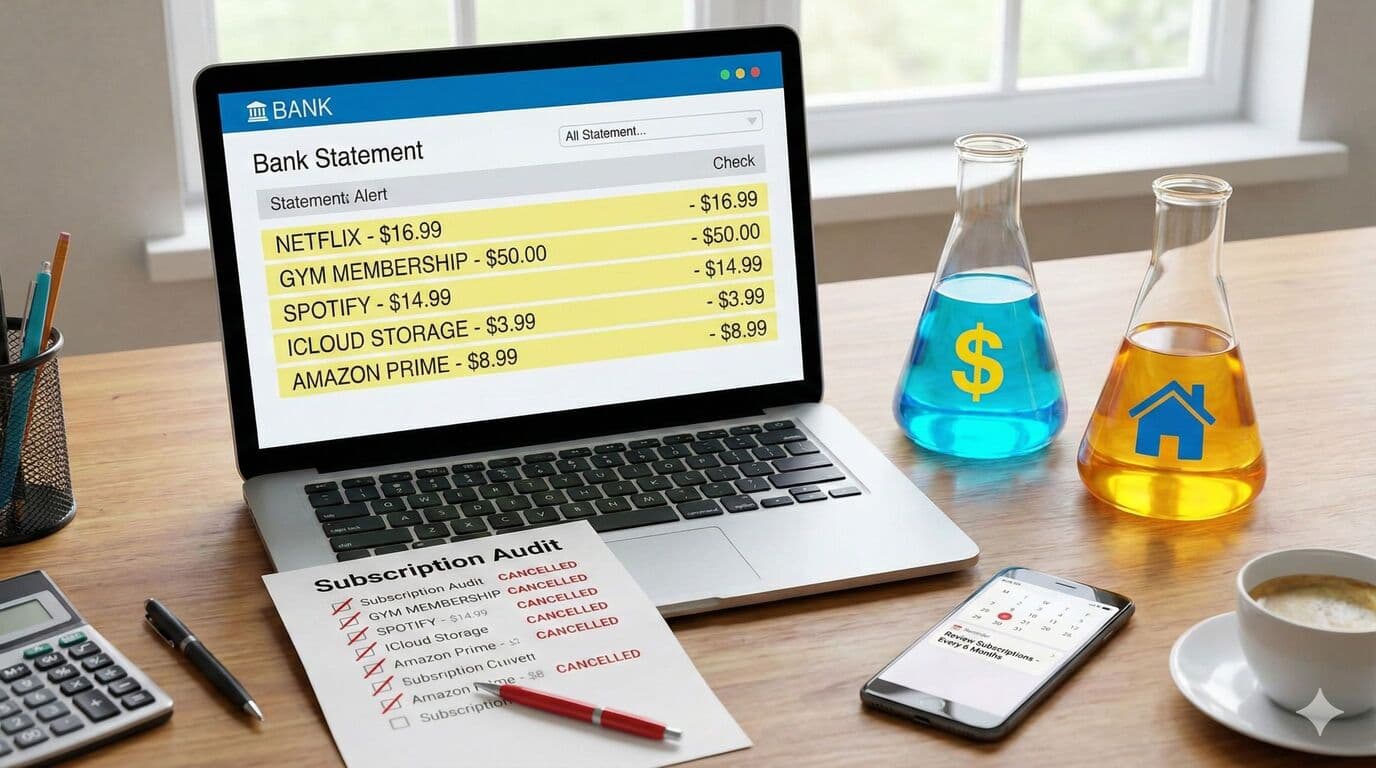
Subscription services have made it remarkably easy to pay for things you do not use. Free trials that convert to paid, annual renewals that slip by unnoticed, and services that seemed useful at the time but now sit dormant. A thorough subscription audit takes about an hour and can recover significant monthly savings.
The Scope of the Problem
Subscription creep is a genuine financial drain for many New Zealand households. The pattern is familiar: sign up for a free trial, forget to cancel, and continue paying for months or years. Multiple streaming services accumulate when one would suffice. Annual subscriptions renew automatically just when you have forgotten they exist.
Some people report finding $100 to $150 per month in subscriptions they had forgotten about or no longer use. Even more modest discoveries of $50 per month represent $600 per year that could be redirected to more useful purposes.
The psychology of subscription pricing works against consumers. Small monthly amounts feel insignificant individually, even when the total is substantial. Annual billing makes charges even less visible, appearing just once per year in a statement you may not scrutinise.
How to Conduct a Subscription Audit
The process is straightforward but requires thoroughness.
Step 1: Review your bank and card statements. Go back 12 months to capture annual subscriptions. Look for recurring charges of the same amount appearing monthly, quarterly, or annually. Export transactions to a spreadsheet if your banking app allows, making it easier to sort and filter.
Step 2: Check app store subscriptions. Both Apple and Google have subscription management sections that show exactly what you are paying for through their platforms. On iPhone, go to Settings then Apple ID then Subscriptions. On Android, go to Play Store then Profile then Payments and Subscriptions.
Step 3: Review email for subscription confirmations. Search your inbox for terms like subscription, renewal, receipt, and the names of services you may have signed up for. This often surfaces subscriptions charged to cards or methods not visible in your main banking.
Step 4: List everything. Create a simple spreadsheet with columns for service name, monthly cost, annual cost, and whether you actively use it. Seeing the total often provides the motivation to take action.
Common Subscriptions to Review
Certain categories accumulate multiple overlapping services:
Streaming video: Netflix, Disney Plus, Neon, Amazon Prime, Apple TV Plus, Stan, and others. At $10 to $25 each per month, three or four services easily exceed $50 monthly. Consider whether you actually watch content on all of them.
Streaming music: Spotify, Apple Music, YouTube Music, Amazon Music, Tidal. Do you need more than one? Family plans may be cheaper if multiple household members use the same service.
News and publications: Digital subscriptions to newspapers, magazines, and specialist content. Some are bundled with other services like library memberships or can be accessed through employer subscriptions.
Cloud storage: iCloud, Google One, Dropbox, OneDrive. Multiple services may be redundant, especially if you are not using the storage capacity you are paying for.
Software subscriptions: Adobe Creative Cloud, Microsoft 365, antivirus programs, VPN services. Check whether you actually use these regularly and whether free alternatives would suffice.
Fitness and wellness: Gym memberships, meditation apps, fitness tracking apps, online workout subscriptions. Multiple overlapping services are common in this category.
Meal and delivery services: HelloFresh, My Food Bag, EveryPlate, and similar services that continue delivering until explicitly cancelled.
Strategies for Reducing Subscription Costs
Cancel immediately after signing up for free trials. Most services allow you to cancel immediately while still retaining access for the full trial period. This ensures you do not forget to cancel later.
Set calendar reminders. For annual subscriptions, set a reminder one week before renewal to review whether you still need the service.
Rotate streaming services. Instead of maintaining four streaming subscriptions simultaneously, subscribe to one at a time based on what you want to watch. Most services allow easy cancellation and resubscription.
Use library services. Public libraries provide free access to services like Kanopy for movies, Libby for ebooks and audiobooks, and PressReader for newspapers and magazines.
Share family plans. Many services offer family plans at modest premiums over individual subscriptions. Sharing with household members or extended family can reduce per person costs.
Downgrade tiers. Premium tiers with features you do not use represent waste. Netflix Basic serves most casual viewers as well as Premium does.
Cancellation Friction
Some services deliberately make cancellation difficult, a practice that has attracted regulatory attention in New Zealand and elsewhere. Common tactics include:
Requiring phone calls instead of online cancellation.
Multiple confirmation screens and guilt inducing messaging.
Hiding cancellation options in account settings.
Offering temporary discounts or free months to delay cancellation.
Persist through these barriers. If a service makes cancellation unnecessarily difficult, consider whether you want to support that business practice even if you later want to resubscribe.
Preventing Future Subscription Creep
After completing your audit, implement practices to prevent the same situation recurring:
Review subscriptions quarterly. A quick check every three months catches new accumulations before they become established.
Use a dedicated card. Putting all subscriptions on a single card makes them easier to track and review.
Question every free trial. Before signing up, ask whether you genuinely expect to continue using the service. If not, the free trial is not actually free given the risk of forgetting to cancel.
Budget for subscriptions explicitly. Having a defined monthly subscription budget creates friction against adding new services.
The Mortgage Impact
Subscription spending directly affects your financial capacity. Finding $100 per month in unnecessary subscriptions represents $1,200 per year that could instead:
Pay down $14,400 of mortgage principal over 12 months if redirected to extra repayments.
Build an emergency fund of $1,200 in a single year.
Fund legitimate expenses you are currently going without.
For mortgage applicants, lower recurring expenses improve your debt to income position and borrowing capacity. Banks assess serviceability based on committed outgoings, and subscriptions count among them.
An Hour Well Spent
A thorough subscription audit takes about an hour and may be the highest return activity available for that time investment. Recovering even $50 per month in unnecessary subscriptions returns $600 per year for one hour of effort.
Schedule time to review your subscriptions today. You are almost certainly paying for something you have forgotten about or no longer need.
Need Help With Your Mortgage?
Our expert advisers are here to guide you through every step of your mortgage journey. Get in touch for a free, no-obligation consultation.
Talk to an Adviser