Refix
Refixing your mortgage in NZ: timing, term selection, rate strategy, and how to avoid costly mistakes when your fixed term ends.
Articles in this topic

Refix, Refinance or Top Up? How to Choose the Right Mortgage Move in 2026
A practical NZ guide to choosing between refixing your current loan, refinancing to another lender, or topping up your mortgage in 2026.

Debt Consolidation By Refinancing Your Mortgage in NZ: When It Helps and When It Hurts
Refinancing can reduce high-interest debt repayments, but it can also turn short-term debt into long-term mortgage interest. Here is how to judge it properly.

Mortgage Refinance Costs and Cashback in NZ: How to Work Out the Real Deal in 2026
Cashback can make refinancing attractive, but only if the numbers work after legal costs, break fees, clawbacks, and loan structure.

Mortgage Refinance Documents Checklist NZ: What To Prepare Before You Apply
A practical document checklist for NZ homeowners preparing to refinance, refix, top up, or switch mortgage lenders in 2026.

The Official Cash Rate (OCR) Explained: What Every NZ Homeowner Needs to Know
The OCR plays a central role in determining how much you'll pay on your mortgage. Here's a plain-English guide to understanding New Zealand's most important interest rate.

Where Will Mortgage Interest Rates Be in 2026?
What might happen to mortgage rates through the rest of 2026? We look at what economists, banks, and the Reserve Bank are saying-with the next OCR decision coming 19 February.

Your Mortgage Rate is 8%
A financial strategy where homeowners should mentally prepare for higher interest rates by adjusting repayments as if their rate were 8%.

Revolving Credit vs Floating Mortgage Account: What's the Difference?
Two flexible mortgage options available to New Zealand homeowners. Both operate on floating interest rates that fluctuate with market conditions.

Renovate Your Home or Pay Down Your Mortgage?
Should NZ homeowners prioritize home renovations or mortgage reduction? Here are the key considerations.

Refinancing for Property Investors: What You Need to Know
Exploring refinancing strategies for property investors beyond simply chasing lower rates.
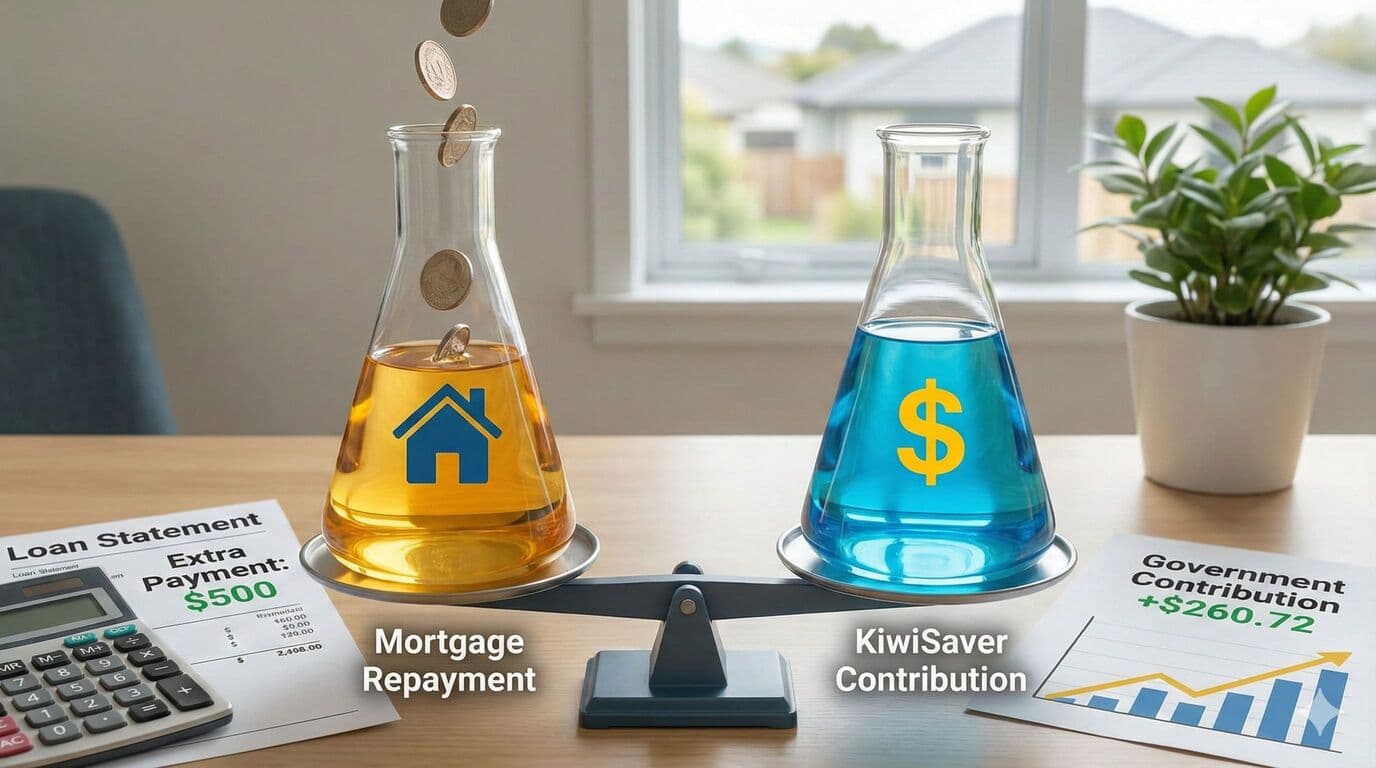
Should I Pay Down My Mortgage or Contribute to KiwiSaver?
A common New Zealand decision: allocating extra income between mortgage repayment and KiwiSaver contributions.

Mortgage Calculator: How to Find the Best One
How to choose a mortgage calculator that actually helps you plan, plus recommendations for the best NZ-specific tools including sorted.org.nz and interest.co.nz.

Is It Worth Getting a Flatmate to Help Pay My Mortgage?
A spare room represents significant untapped earning potential. Here's how a flatmate could accelerate your mortgage repayment.

Why Should You Use a Mortgage Broker If You Already Have a Mortgage?
When you think about mortgage broking, you probably think about it in the context of buying a house. But your mortgage broker provides multiple important services throughout the life of your mortgage.

NZ Interest Rates Prediction 2020 (Historical Archive)
HISTORICAL: This article from early 2020 was overtaken by COVID-19 events. Preserved for historical interest only.

NZ Mortgage Interest Rates Prediction 2023 (Historical Archive)
HISTORICAL: This 2023 prediction article is now over 3 years old. Preserved for historical interest-see how our predictions played out.

Where Will Mortgage Interest Rates Be In 2024? (Historical Archive)
HISTORICAL: This 2024 prediction article has been overtaken by events. The OCR has since dropped to around 4% with further cuts expected.

What Could NZ Mortgage Rates Be In 2025? (Historical Archive)
HISTORICAL: This 2024 prediction has been superseded. Actual OCR cuts were more aggressive than predicted, dropping to around 2.25% by late 2025.

Should You Break Your Fixed Mortgage? Here's How to Calculate If It's Worth It
Over the past 16 years, mortgage interest rates in New Zealand have had their fair share of ups and downs, creating situations where borrowers experience regret about their fixed rates.

Weekly vs Monthly Mortgage Payments: Which Is Better?
Does paying your mortgage weekly instead of monthly really save you thousands? This article investigates whether this advice holds merit through mathematical analysis.

Refinancing Your Mortgage in NZ: The Go-To Plan Before You Switch Banks
A complete New Zealand refinancing plan covering refix vs refinance, break fees, cashback, LVR, DTI, equity release, top-ups, documents, and when to talk to an adviser.

Why Don't We Have 30-Year Fixed Mortgages in New Zealand?
If you've lived in the United States, you'll probably be familiar with 30-year fixed mortgages. But in New Zealand, the longest fixed term you're likely to get is five years. So why the difference?

The Magic of Compound Interest When Paying Down Your Mortgage
Compound interest represents "interest on interest." Understanding this concept can help you save hundreds of thousands throughout your loan.

Fixing or Refixing Your Mortgage: 3 Questions to Ask Before You Lock In
Let's be honest, refixing your mortgage doesn't exactly set your pulse racing. But it represents a financially significant annual decision deserving careful consideration before locking in rates.