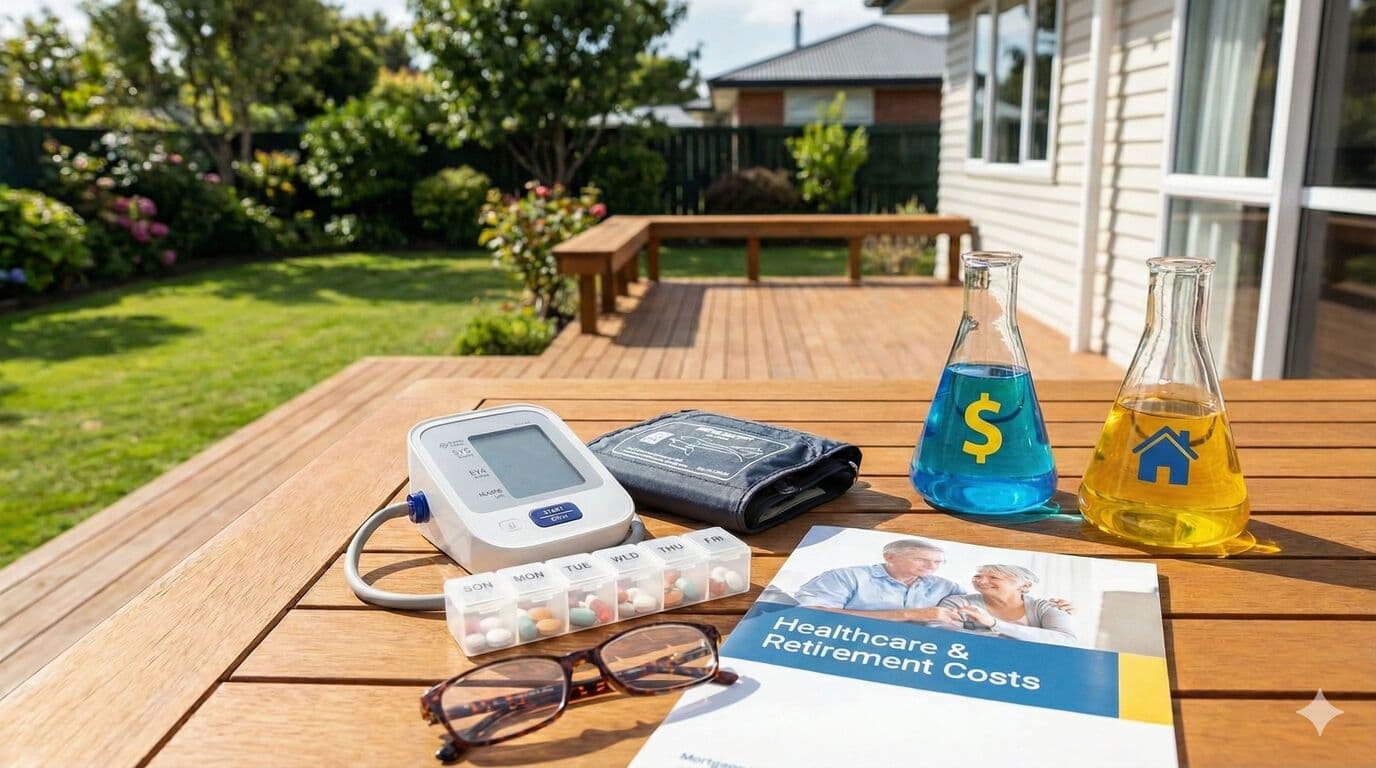
Health insurance is one of those topics that comes up constantly when I am working through budgets with mortgage clients. People want to know whether they should keep paying their premiums or redirect that money onto the mortgage, and the honest answer is that it depends on your circumstances. But before you can make that call, you need to understand what you are actually getting from both the public and private systems in New Zealand.
Roughly 1.5 million New Zealanders carry some form of private health insurance, which is a significant number given our population. The rest rely entirely on the public system. Both approaches have genuine merit, and the right choice comes down to your age, health, financial position, and how you feel about risk.
What the Public System Covers
New Zealand's public healthcare system is genuinely good at the acute end. If you have a heart attack, get hit by a car, or are diagnosed with cancer, you will receive treatment without reaching for your wallet. Emergency departments, intensive care, and urgent surgical procedures are fully funded and available to all residents and citizens regardless of insurance status.
Day-to-day GP visits are subsidised but not free for most adults. You can expect to pay somewhere between $60 and $85 per standard consultation, sometimes more depending on the practice and your location. Prescriptions are heavily subsidised through Pharmac, with most funded medications costing just a few dollars per script. For families with young children, GP visits for under-14s are free, which takes some pressure off the household budget.
Where the Public System Falls Short
The public system's weakness is anything that is not immediately life-threatening. It operates on a triage model - clinical need determines priority, not how long you have been waiting or how much discomfort you are in. If you need a hip replacement but can still hobble around, you might wait 12 months or longer. Specialist consultations for non-urgent conditions can take months just to get the initial appointment, let alone any treatment that follows.
You also get very little say in who treats you or where. The public system allocates you to available providers, and if the nearest specialist with capacity is at a different hospital from your preference, that is where you go. For many people this is perfectly fine, but if you have strong preferences about your care team or want to be treated at a specific facility, the public system does not cater to that.
What Private Insurance Gets You
The core value proposition of private health insurance is speed and choice. Instead of waiting months for a specialist appointment, you can typically be seen within a few weeks. If surgery is recommended, it gets booked promptly rather than joining a waiting list. You pick your surgeon, you pick your hospital, and the whole process moves at a pace that suits you rather than the system.
Private hospitals tend to offer a different experience to public facilities - single rooms, flexible visiting hours, and generally a quieter environment. Whether that matters to you is personal, but plenty of people value it, particularly if they are recovering from surgery and want decent rest.
Understanding the Different Levels of Cover
Most health insurance policies in New Zealand are structured in tiers. The foundation is surgical and hospital cover, which pays for operations, hospital stays, and the associated specialist fees. This is the cover that most people consider essential because it addresses the big-ticket items that would otherwise cost tens of thousands of dollars out of pocket.
The next tier up adds specialist consultations and diagnostic tests - things like MRI scans, CT scans, and seeing a specialist before you reach the point of needing surgery. This cover can be genuinely useful because getting a quick diagnosis often means catching problems early, and an MRI scan alone can cost $800 to $1,500 if you are paying privately.
Then there is GP and everyday cover, which contributes towards routine visits, dental, optical, and physiotherapy. Opinions are divided on this tier. The premiums are not cheap, and some people find they pay more in premiums than they claim back over the course of a year. If you are generally healthy and only visit the GP a couple of times annually, the maths often does not work in your favour.
The Cost Reality
Here is where it gets uncomfortable. Health insurance premiums increase with age, and they increase substantially. A policy that costs $100 a month when you are 30 could easily run to $350 or $400 a month by the time you hit your sixties - and that is before accounting for the annual premium increases that happen regardless of your claims history. Healthcare costs rise faster than general inflation, and insurers pass those increases through to policyholders every year.
Over a 30-year period, the cumulative premiums on a mid-range policy can easily exceed $100,000. That is a genuine chunk of money, and it is worth asking honestly whether you would spend that much on healthcare if you were paying out of pocket as needed. For some people the answer is clearly yes - one major surgery can cost $30,000 to $50,000 privately. For others, particularly those who stay healthy through their working years, the premiums may exceed their total healthcare costs by a wide margin.
Pre-existing Conditions and the Timing Question
This is the single most compelling argument for taking out health insurance while you are young and healthy. Insurers exclude pre-existing conditions - anything you had before the policy started will not be covered. Once you are on a policy though, new conditions that develop afterwards are covered for as long as you maintain the policy.
If you let your cover lapse for any period and then try to rejoin later, any conditions that arose during the gap will typically be excluded as pre-existing. This creates a genuine lock-in effect, and it is why many financial advisers recommend getting at least basic surgical cover in your twenties or early thirties before anything crops up. The premiums are low at that age, and you are essentially buying insurance against the unknown health events of your future.
So Should You Keep It or Redirect the Money?
When mortgage clients ask me this question, I walk through a few scenarios with them. If the premiums are causing real financial strain and you are struggling to meet mortgage payments, cutting the insurance and directing that money to the mortgage is a pragmatic choice - you still have the public system as your safety net. If you have built up substantial savings or have a strong emergency fund, self-insuring by paying for private treatment as needed is a legitimate strategy.
But if you can comfortably afford the premiums alongside your mortgage payments, keeping your health insurance is generally sensible. The value is not just financial - it is the peace of mind that if something goes wrong health-wise, you can get it sorted quickly without it derailing your work or your life for months while you wait in the public queue. As with most financial decisions, there is no single right answer. Run the numbers for your own situation, talk to an insurance adviser if you want a proper policy comparison, and make a decision you can stick with for the long term.
Need Help With Your Insurance?
Our expert advisers will help you find the best adviser for you. Get in touch to be connected with a professional insurance adviser.
Talk to an Adviser