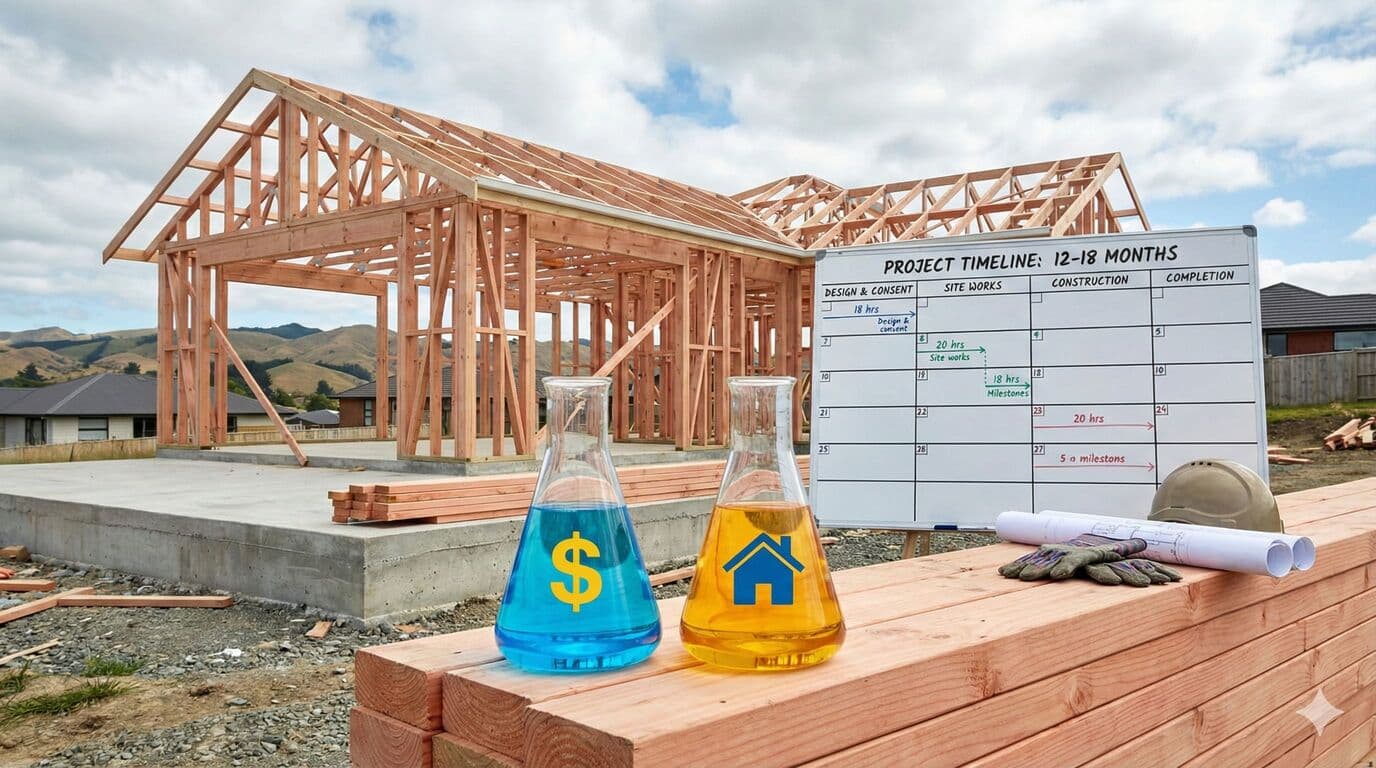
Building a house in New Zealand typically takes 12 to 18 months from signing a contract to moving in. However, timelines vary significantly based on project complexity, builder capacity, weather, and numerous other factors. Understanding realistic timeframes helps you plan effectively.
Setting accurate expectations prevents frustration and enables proper planning for your current living arrangements, financing, and life events.
Pre-Construction Timeline
Before building starts, several processes must complete. This pre-construction phase often takes longer than people expect.
Design development takes 2 to 6 months depending on whether you choose a standard plan or custom design. Working with an architect on a unique design takes longer than selecting from a builder's existing plans.
Building consent typically requires 20 working days for council processing, but this is a minimum. Requests for further information reset the clock. Complex projects or overloaded councils extend timelines. Allow 2 to 3 months for the consent process.
If resource consent is required, add another 2 to 3 months. Resource consent processes involve public notification periods, potential hearings, and detailed assessment. Some projects require both consents sequentially rather than simultaneously.
Finance approval, contract finalisation, and construction scheduling add further time. The period between deciding to build and actually starting construction commonly takes 4 to 8 months.
Construction Duration
Once building starts, standard single-storey homes typically complete in 6 to 10 months. Two-storey homes add 2 to 4 months. Complex architectural designs or difficult sites extend timelines further.
Progress follows a predictable sequence. Foundations take 2 to 4 weeks depending on soil conditions and foundation type. Framing follows, taking 3 to 6 weeks for the structural timber or steel work.
The building becomes "closed in" when roofing and external cladding complete. This milestone, reached 3 to 5 months into construction, protects the interior from weather and enables internal work to proceed regardless of conditions.
Internal fit-out includes plumbing, electrical, insulation, linings, kitchen and bathroom installation, painting, and flooring. This phase typically takes 3 to 5 months and involves numerous trades working in sequence.
Factors That Extend Timelines
Weather affects construction more than many buyers expect. Heavy rain, high winds, and frost all create delays. Southern regions experience more weather delays than northern areas. Winter builds face more interruptions than summer projects.
Material availability can create unexpected delays. Supply chain disruptions, international shipping delays, and domestic shortages all affect material arrival times. Specialty items with long lead times need ordering early.
Builder capacity influences your timeline. Popular builders may have projects queued months ahead. Starting construction may be delayed while they complete prior commitments. Less in-demand builders may start sooner but may have capacity issues for other reasons.
Site conditions discovered after starting can extend timelines. Unsuitable ground, contamination, or buried obstacles require resolution before proceeding. These discoveries trigger variations and delays.
Changes during construction almost always extend timelines. Even simple changes require revised plans, potential consent amendments, and scheduling adjustments. Major changes can add months to projects.
Project-Specific Variations
Group home builders often achieve faster timelines than custom builds. Their standardised designs, established supplier relationships, and repeatable processes create efficiencies. Some group builders complete standard homes in 5 to 7 months.
Complex architectural designs take longer at every stage. Design development is extended, consent processing takes longer due to complexity, and construction involves more specialist work and coordination challenges.
Remote locations add time for material delivery and trade travel. Sites without existing services require connection work that urban sites avoid. These factors compound through the construction timeline.
Managing Your Timeline
Build contingency into your planning. If your builder says 10 months, plan for 12. If you must be out of your rental by a specific date, that date should fall well after expected completion, not coincide with it.
Clear decision-making prevents delays you control. Having selections finalised before construction starts, responding promptly to builder questions, and avoiding changes during construction all protect your timeline.
Regular communication with your builder helps identify emerging delays early. Weekly progress updates and site meetings keep you informed and enable early intervention when issues arise.
Accept that some delays are unavoidable. Weather cannot be controlled. Supply chain disruptions happen. Maintaining perspective helps manage the stress that building projects inevitably create.
The Complete Picture
From initial design discussions to moving in, expect 12 to 24 months for most projects. Simple builds with favourable conditions achieve faster timelines. Complex projects or challenging circumstances extend beyond typical ranges.
This timeline means building requires patience and flexibility. Your current living arrangements need to accommodate this extended period. Financing costs during construction add up over months. Life events like job changes, family additions, or relocations need consideration.
Despite the duration, many owners find the wait worthwhile. Moving into a home designed and built to your specifications, with everything new and under warranty, rewards the patience required to get there.
Need Help With Your Mortgage?
Our expert advisers are here to guide you through every step of your mortgage journey. Get in touch for a free, no-obligation consultation.
Talk to an Adviser