The building quote you receive covers the house itself, but numerous costs fall outside that figure. Understanding these hidden costs before committing prevents budget blowouts and financial stress during construction. A realistic total budget is often 20 to 30 percent higher than the quoted build cost.
These are not hidden in any deceptive sense. Builders disclose what their quotes include and exclude. However, many first-time builders focus on the headline figure without fully accounting for everything else required.
Site Works and Preparation
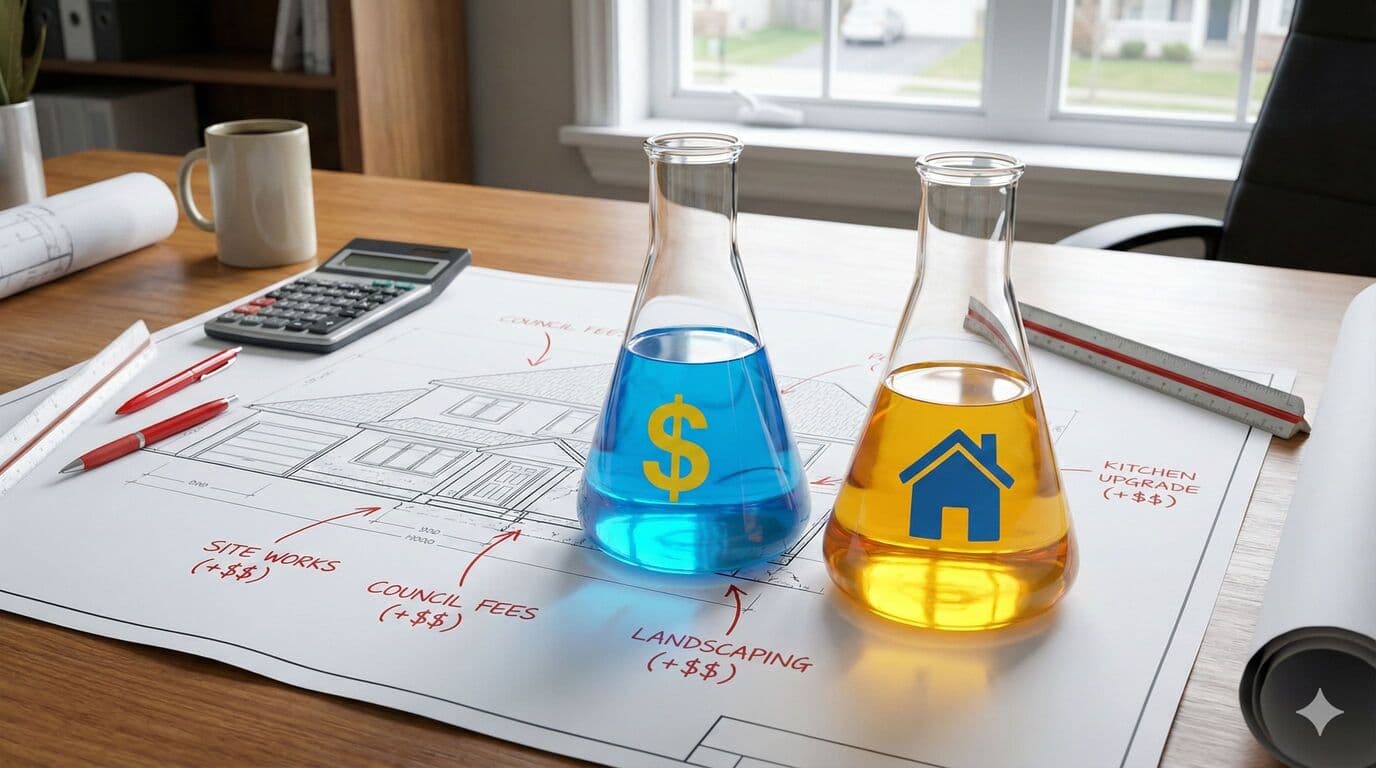
Site works regularly generate the largest additional costs. Your section may look ready to build, but substantial work is often needed before construction starts.
Earthworks to level the building platform can cost $10,000 to $50,000 depending on the amount of cut and fill required. Sloping sites require more extensive work than flat sections.
Retaining walls hold back cut faces and support level changes. Even modest retaining requirements cost $15,000 to $30,000. Complex sites with significant level changes can require $100,000 or more in retaining.
Service connections bring water, wastewater, electrical, and telecommunications from the road boundary to your house location. If services end at the boundary, running them across your section adds $5,000 to $20,000 depending on distance and complexity.
Council Fees and Contributions
Building consent fees vary by council but typically range from $3,000 to $8,000 for a new house. Complex projects or multiple consent requirements increase fees.
Development contributions fund infrastructure to support new housing. These council charges for water, wastewater, transport, and reserves range from $5,000 in some areas to over $30,000 in others. Check your specific council's contribution schedule.
Resource consent, if required, adds further costs. Consent application fees plus professional fees to prepare documentation can reach $5,000 to $15,000 for straightforward applications.
Professional Fees
Architects and designers create the plans you build from. Even for modified standard plans, design fees apply. Custom designs require substantially more. Budget $10,000 to $50,000 depending on design complexity.
Engineers certify structural and geotechnical aspects. Foundation designs, retaining wall specifications, and other engineering documentation typically cost $5,000 to $15,000.
Surveyors stake out your building position and may be needed for other site assessments. Allow $2,000 to $5,000 for survey work.
Landscaping and External Works
Driveways cost $5,000 for basic gravel through to $30,000 or more for paved finishes on longer drives. Steep access requires engineered solutions that increase costs further.
Fencing perimeters starts around $10,000 for standard timber paling and increases with length, material choice, and retaining requirements.
Landscaping transforms a building site into a home. Even basic lawns, gardens, and plantings cost $10,000 to $30,000. Comprehensive landscaping with outdoor living areas, irrigation, and mature plants easily exceeds $50,000.
Letterbox, paths, washing lines, and other minor items accumulate to several thousand dollars.
Allowances and Selections
Building contracts include allowances for selections like tiles, carpet, appliances, and fixtures. These allowances often reflect basic specifications rather than what you actually want.
Kitchen allowances frequently fall short of expectations. A $15,000 kitchen allowance covers basic cabinetry and appliances. A well-specified kitchen with quality appliances costs $30,000 to $50,000. The difference comes from your pocket.
Bathroom allowances similarly reflect basic specifications. Upgrading to quality fixtures, tiles, and features adds thousands per bathroom.
Flooring allowances assume standard carpet and basic vinyl. Timber flooring, quality tiles, or premium carpet quickly exceed allowances.
Contingency and Variations
Contingency of 10 to 15 percent of the build cost provides a buffer for unexpected expenses. Ground conditions, design changes, and unforeseen complications arise in most projects.
Variations requested during construction cost more than the same work specified upfront. Changes are priced at less competitive rates because they disrupt planned work. Minimising variations protects your budget.
Interest During Construction
Interest accrues on drawn funds throughout construction. A 12-month build at current rates adds meaningful interest cost before you even move in.
If you are renting during construction, you pay rent and interest simultaneously. This double-housing cost continues until the build completes and you take possession.
Moving and Establishment
Moving costs, window treatments, furniture, and establishment expenses await after construction completes. These are not building costs but are essential to actually living in your new home.
Window treatments alone can cost $5,000 to $15,000 depending on window numbers and selection choices.
Calculating Your True Budget
Start with your building quote. Add site works based on your specific section assessment. Add council fees and contributions. Add professional fees. Add landscaping and external works.
Consider likely selection upgrades above allowances. Apply a contingency percentage. Factor in interest and rent during construction.
The total is your realistic project budget. If this exceeds what you can afford, adjusting specifications before signing is far easier than discovering shortfalls mid-build.
Need Help With Your Mortgage?
Our expert advisers are here to guide you through every step of your mortgage journey. Get in touch for a free, no-obligation consultation.
Talk to an Adviser