Building a new home in New Zealand remains a significant financial undertaking in 2026. While construction cost inflation has stabilised compared to the volatile early 2020s, buyers still face substantial costs that vary dramatically by region, specification, and site conditions.
The average new home in New Zealand now costs around $460,000 to build, with the average size having dropped to 141 square metres. This represents a considerable shift from 2010 when average homes were 202 square metres. Kiwis are building smaller, but they are not necessarily building cheaper.
Current Building Costs Per Square Metre
Building costs in New Zealand currently range from $2,500 to $4,500 per square metre for most residential projects. Where your build falls within this range depends on your location, specification level, and the complexity of your design.
Entry-level builds with basic specifications sit at the lower end around $2,500 to $3,000 per square metre. These homes feature standard carpet, laminate benchtops, basic brick or weatherboard cladding, and minimal architectural complexity. They get the job done without frills.
Mid-range builds typically cost $3,000 to $4,000 per square metre. This level allows for upgrades like stone benchtops, tiled showers rather than acrylic, better insulation beyond minimum code requirements, and more design flexibility. Most family homes fall into this category.
High-end and architecturally designed homes exceed $4,500 per square metre and can reach well beyond $6,000 for truly premium specifications. These projects feature custom cabinetry, high-specification kitchens and bathrooms, premium cladding systems, and complex architectural forms.
Regional Cost Variations
Where you build matters significantly. Auckland remains the most expensive region, with mid-range builds commonly exceeding $4,000 per square metre. Land scarcity, stricter zoning requirements, and high demand all contribute to elevated costs.
Wellington and Otago (particularly Queenstown) follow close behind. Wellington's steep sections frequently require expensive foundation solutions, while Queenstown's high cost of living translates to higher labour costs. Otago saw costs increase by 20% in 2023 alone.
The most affordable regions to build are Marlborough, West Coast, and Southland. Marlborough averages around $2,669 per square metre, making it significantly cheaper than main centres. Lower land costs and less competition for building resources contribute to these savings.
Christchurch offers a middle ground, with costs typically lower than Auckland but higher than regional centres. The city's post-earthquake building boom created a well-established construction industry that remains competitive.
What Is Included in Building Costs
Understanding what your quoted price includes is essential. Standard build contracts typically cover the house itself, including foundations, framing, cladding, roofing, internal fitout, basic landscaping to council requirements, and connection to services at the boundary.
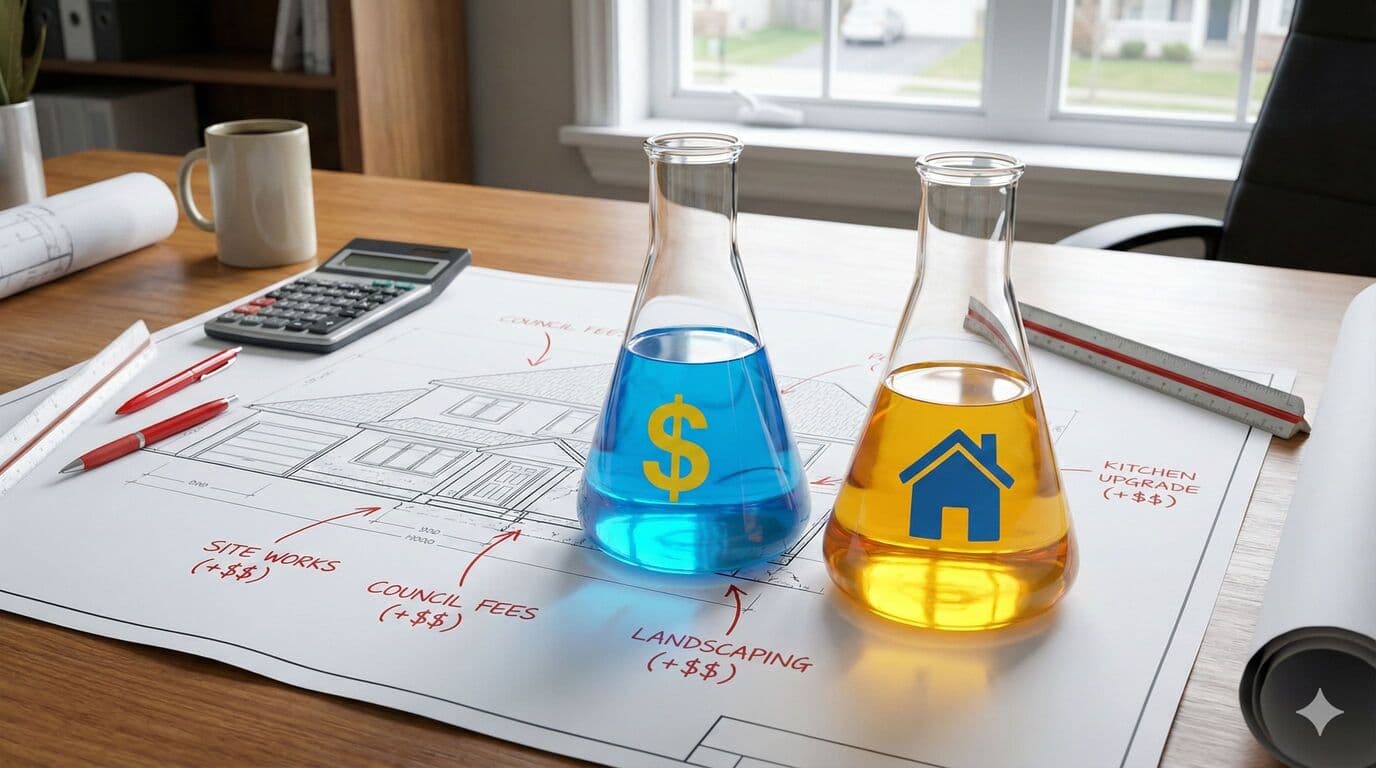
However, significant costs often fall outside standard quotes. Site works including earthworks, retaining walls, and bringing services from the boundary to the house can add $20,000 to $100,000 depending on your section. Driveways, fencing, landscaping beyond basic grass, and outdoor living areas are frequently excluded.
Council fees for building consent, development contributions, and inspections typically add $15,000 to $40,000. Resource consent, if required for aspects like height infringements or protected trees, adds further cost and time.
Calculating Your Total Budget
For realistic budgeting, take your expected build cost and add 20 to 30 percent for items outside the standard contract. On a $500,000 build, that means budgeting an additional $100,000 to $150,000 for site works, landscaping, driveways, and unexpected costs.
A contingency of 10 to 15 percent on top of everything else provides a buffer for genuine surprises. Ground conditions, design changes, and unforeseen complications have a way of appearing in even the best-planned projects.
| Build Type | Cost Per m² | 150m² Home | 200m² Home |
|---|---|---|---|
| Entry Level | $2,500-3,000 | $375-450k | $500-600k |
| Mid-Range | $3,000-4,000 | $450-600k | $600-800k |
| High-End | $4,500+ | $675k+ | $900k+ |
Financing a New Build
New build mortgages work differently from standard home loans. Qualifying new-build or construction lending may create more deposit flexibility than some existing-home purchases, which can make new builds more accessible for eligible buyers. A 10% deposit is not automatic: lender policy, servicing, valuation, borrower eligibility, property eligibility, project costs, and loan structure still apply.
Progress payments add complexity. Rather than receiving funds at settlement, builders receive payments at defined stages: deposit, foundations, framing, lockup, and completion. Your mortgage adviser structures your loan to accommodate this schedule.
The construction loan process differs from purchasing an existing home, and working with an adviser experienced in new build finance helps navigate these differences.
Making Building Work for You
Building a new home in New Zealand is expensive, but it offers advantages that existing homes cannot match. Modern insulation, double glazing, and efficient heating systems reduce running costs. Everything is new, with warranties providing protection against defects. And you get exactly what you want rather than compromising on someone else's layout.
Whether building makes financial sense depends on land costs in your area, your ability to manage the process, and your tolerance for the inevitable challenges that construction brings.
Need Help With Your Mortgage?
Our expert advisers are here to guide you through every step of your mortgage journey. Get in touch for a free, no-obligation consultation.
Talk to an Adviser