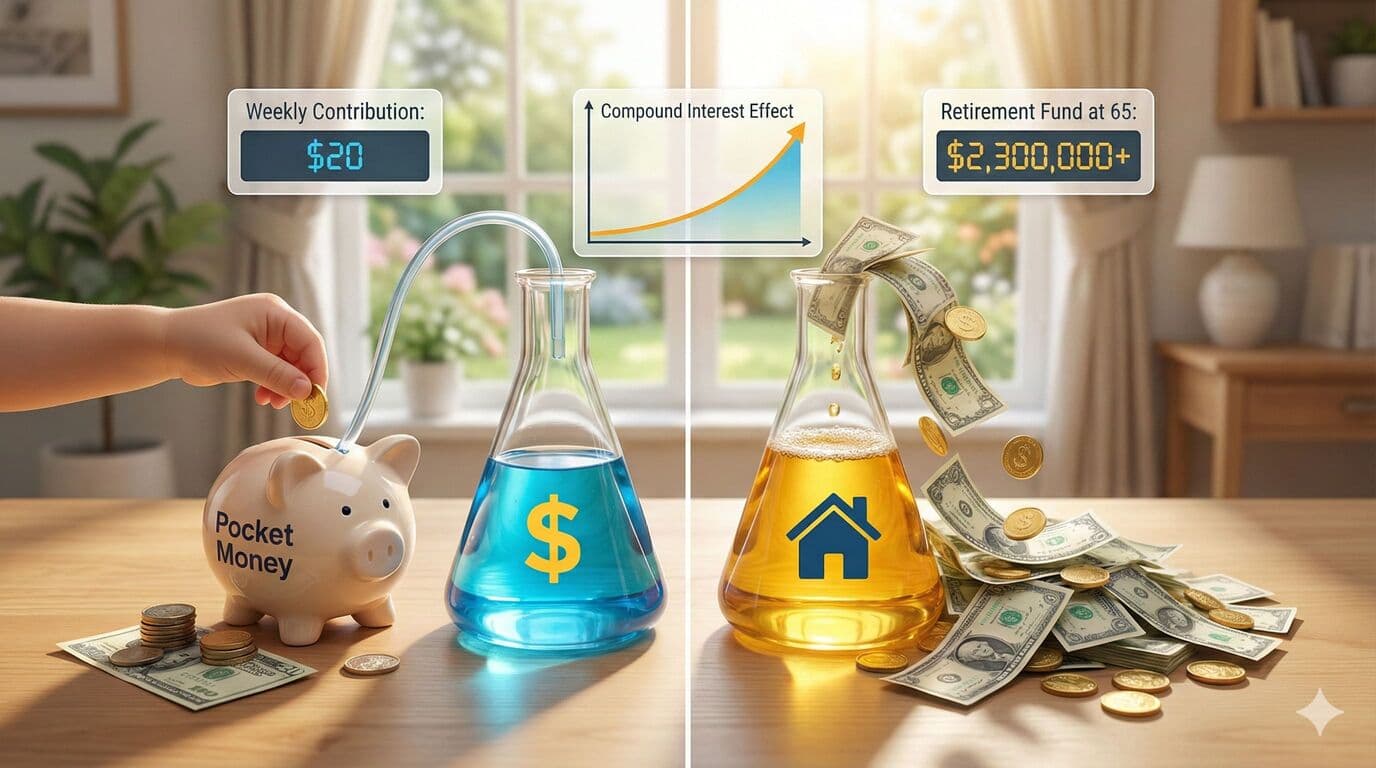
Children can have KiwiSaver accounts, and starting early gives them the longest possible time for compound growth. A modest regular contribution during childhood can grow into a significant sum by the time they turn 65. Understanding how accounts for minors work helps parents and grandparents support the next generation.
The earlier you start, the more time investments have to grow.
Opening An Account For Children
Parents or guardians can open KiwiSaver accounts for children of any age. Choose a provider directly rather than waiting for automatic enrolment, which happens with employment.
You select the fund type and manage the account until the child is old enough to take control. Most providers allow online account opening with documentation confirming your relationship to the child.
The child becomes the account holder, but you make decisions and contributions on their behalf until they reach an appropriate age.
Recent Rule Changes
From 1 July 2025, 16 and 17 year olds became eligible for the government contribution. Previously, members needed to be 18 or older to receive the KiwiSaver government contribution.
From 1 April 2026, employers must also make contributions for 16 and 17 year old employees. This extends the full KiwiSaver benefits to younger working members.
These changes make starting KiwiSaver for teenagers even more attractive, as they can now receive government contributions earlier.
Contributions For Children
There is no employer contribution for children who are not employed. Contributions come from parents, grandparents, or others who choose to contribute on their behalf.
There is no minimum contribution for non-employed members. You can contribute any amount at any frequency that suits your budget.
Regular small contributions, such as birthday and Christmas money, add up over decades. Consistency matters more than large amounts.
Government Contributions For Under 18s
From July 2025, 16 and 17 year olds can receive the KiwiSaver government contribution of up to $260.72 per year if they contribute at least $1,042.86. This applies whether contributions come from employment or voluntary sources.
Children under 16 do not receive the KiwiSaver government contribution. However, their contributions still grow through investment returns.
Once children turn 16, consider ensuring contributions reach the threshold to claim the full government contribution.
Choosing A Fund For Children
Children have the longest investment horizon of any members. A growth or aggressive fund typically suits this timeframe because short-term volatility smooths out over decades.
Conservative funds may grow too slowly for young members. The stability they offer is unnecessary given the long time before the child will access funds.
Review fund choice periodically as children grow. Adjust if circumstances change or as withdrawal dates approach for first home purchase.
Teaching Financial Literacy
Involving children in their KiwiSaver as they grow teaches valuable lessons. Show them statements, explain compound growth, and discuss investment concepts at age-appropriate levels.
Teenagers can begin making their own fund choices with guidance. This builds financial capability before they manage their own finances independently.
The account becomes a practical tool for financial education, not just a savings vehicle.
Access Before Retirement
Children can use their KiwiSaver for a first home purchase once they have been members for three years and meet other criteria. This is often how young people first access their balance.
Starting early means the three-year waiting period is completed well before most people are ready to buy a home.
The balance grows through childhood and early adulthood, providing a meaningful first home deposit when the time comes.
Grandparent Contributions
Grandparents often want to help grandchildren financially. Contributing to KiwiSaver is a tax-efficient way to support their future.
Contributions go directly into an investment that cannot be accessed until first home purchase or retirement. This ensures the funds are used for significant life purposes rather than spent casually.
Consider regular contributions as birthday or Christmas gifts that build lasting wealth rather than temporary possessions.
Managing Multiple Children
Treating children equitably is important for family harmony. Consider equal contribution amounts across children, adjusting for different ages if desired.
Keep records of contributions to each childs account. This helps maintain fairness and provides documentation for future reference.
Budget for multiple contributions realistically. Small consistent amounts for each child are better than large sporadic amounts that become difficult to maintain.
Need Help With Your KiwiSaver?
Our expert advisers are here to guide you through every step of your KiwiSaver journey. Get in touch for a free, no-obligation consultation.
Talk to an Adviser