The government contributes to your KiwiSaver through the KiwiSaver government contribution. This is essentially free money that increases your retirement savings at no additional cost to you. Understanding how it works and ensuring you receive the maximum amount optimises your KiwiSaver outcomes.
The government contribution is one of KiwiSaver's most attractive features, yet many members do not contribute enough to claim the full entitlement. Changes introduced from 1 July 2025 reduced the credit, making it even more important to understand how to maximise what is available.
How The Government Contribution Works
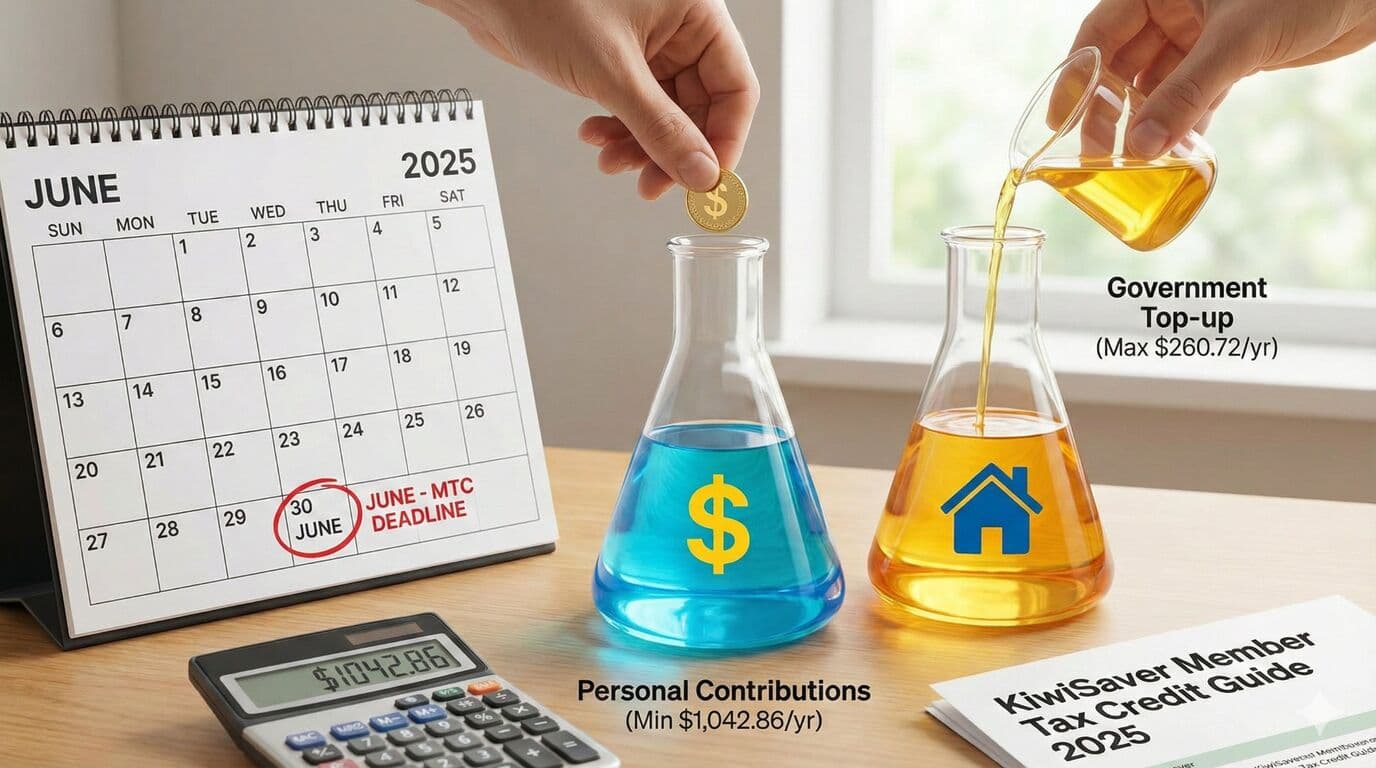
From 1 July 2025, the government contributes 25 cents for every dollar you contribute, up to a maximum of $260.72 per year. To receive the full contribution, you need to contribute at least $1,042.86 annually.
This works out to approximately $20 per week or $87 per month. Contributing this minimum ensures you claim the full government contribution regardless of your percentage rate choice.
The credit applies to your contributions only, not employer contributions. Your employer's contributions do not count toward triggering the government contribution.
Why It Still Matters
A 25 percent return on your first $1,042.86 of eligible personal contributions remains attractive compared to most low-risk savings options. Claiming the full government contribution each year is one of the simplest ways to boost your KiwiSaver balance.
Tools like Sorted can help you compare KiwiSaver providers, but the contribution itself depends on your eligibility and the amount you personally contribute during the KiwiSaver year.
Income Cap For Eligibility
From 1 July 2025, an income cap applies to the government contribution. If your taxable income exceeds $180,000 per year, you are no longer eligible for the government contribution.
This income cap is assessed annually. If your income varies year to year, you may qualify in some years but not others depending on your earnings that tax year.
The cap applies to individual taxable income, not household income. A couple should check each member separately, because one person may qualify while the other does not.
Age Eligibility Changes
From 1 July 2025, members aged 16 and 17 became eligible for the government contribution. Previously, members needed to be 18 or older.
You must live in New Zealand mainly. Those living overseas for extended periods may not qualify. Short holidays and temporary absences typically do not affect eligibility.
The credit is not available during a contributions holiday. If you have taken a break from contributing, you do not receive the credit during that period.
Calculating Your Entitlement
The government contribution year runs from 1 July to 30 June, aligned with the New Zealand tax year. Contributions during this period determine your credit.
Contributing exactly $1,042.86 claims the full $260.72 credit. Contributing more does not increase the credit, but contributes to your retirement savings.
Contributing less means receiving proportionately less. If you contribute $500, you receive approximately $125 in government contribution.
Contribution Rate Changes
Default contribution rates are changing. From 1 April 2026, the minimum employee and employer contribution rate increases from 3 percent to 3.5 percent. From 1 April 2028, it increases again to 4 percent.
Members who need to stay at 3 percent can apply for a temporary rate reduction. The reduction can run for 3 to 12 months, and it needs to be renewed if you still need the lower rate.
Higher contribution rates mean more members will automatically contribute enough to claim the full government contribution without needing voluntary top-ups.
Self-Employed Considerations
Self-employed people must make voluntary contributions to receive the government contribution. Unlike employees, there is no automatic deduction from income.
Setting up regular direct debits ensures consistent contributions. Contributing at least $1,042.86 across the year claims the full contribution.
Many self-employed members forget to contribute or undercontribute, missing out on the government contribution they could have claimed.
Making Voluntary Contributions
If regular employment contributions do not reach $1,042.86, you can make additional voluntary contributions to reach the threshold.
Voluntary contributions can be made by direct debit, automatic payment, or lump sum. Your KiwiSaver provider can explain their process for receiving additional contributions.
Ensure contributions reach your KiwiSaver account before 30 June to count toward that year's government contribution calculation.
Maximising Long-Term Value
The government contribution compounds over your working life. Claiming $260.72 annually for 40 years contributes over $10,000 in government money to your retirement savings, before investment returns.
With investment returns over those decades, the compounded value of government contributions alone can reach $25,000 or more at retirement.
Ensuring you consistently claim the full contribution by contributing at least the minimum threshold is one of the simplest ways to optimise your KiwiSaver outcomes.
Need Help With Your KiwiSaver?
Our expert advisers are here to guide you through every step of your KiwiSaver journey. Get in touch for a free, no-obligation consultation.
Talk to an Adviser