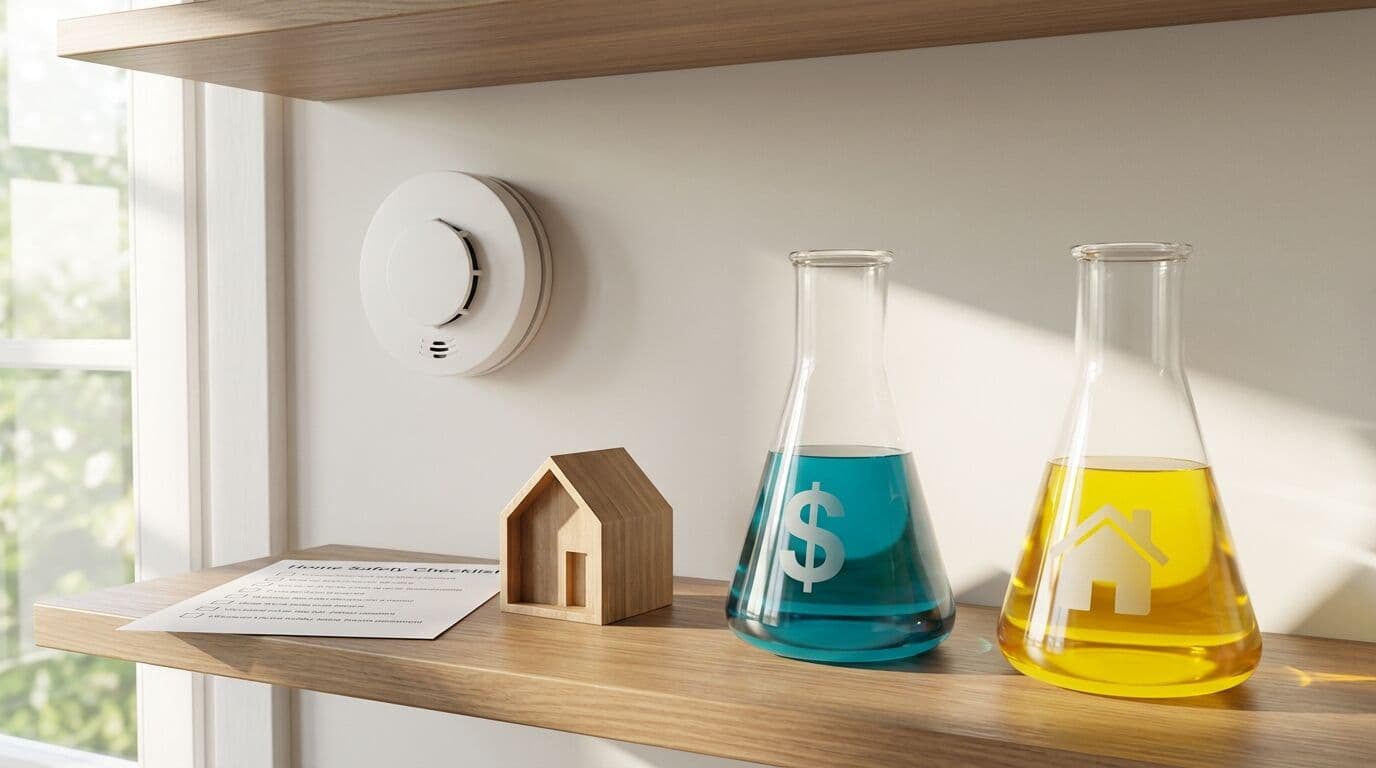
Smoke alarms are not a budgeting topic in the traditional sense. They do not save you money on monthly bills. But they are among the most important safety investments any homeowner can make, and getting them right costs less than most people think. This article covers what you need to know about smoke alarm requirements, types, and installation in New Zealand homes.
Current Requirements
Smoke alarm regulations have evolved significantly in recent years.
For rental properties, the Residential Tenancies Regulations require all bedrooms, living spaces, and hallways to have working smoke alarms. Alarms must be either hardwired or photoelectric battery units with a battery life of at least eight years. Landlords are responsible for installation and ensuring alarms work at the start of each tenancy. Tenants are responsible for replacing batteries and not tampering with alarms.
For new builds and consented renovations from November 2024, the Building Code now requires interconnected smoke alarms meeting NZS 4514:2021. This means when one alarm detects smoke, all alarms in the house sound together.
For existing owner occupied homes, there are no legal requirements, but Fire and Emergency New Zealand strongly recommends following the same standards as rental properties.
Photoelectric Versus Ionisation Alarms
Photoelectric alarms are now the required standard in New Zealand, and for good reason.
Photoelectric alarms detect the slow, smouldering fires that are most common in homes. They respond to visible smoke particles that interrupt a light beam inside the alarm. These fires often occur at night when people are asleep and produce large amounts of smoke before bursting into flame.
Ionisation alarms were common in older installations but respond faster to flaming fires than smouldering ones. They are also prone to false alarms from cooking, which leads many people to remove batteries or disable them. This makes them less effective in practice.
If you have ionisation alarms, plan to replace them with photoelectric units.
Interconnected Versus Standalone Alarms
Interconnected alarms communicate with each other so that when one detects smoke, all alarms in the house sound. This is critical in larger homes or multi storey houses where an alarm in a distant room might not be heard from the bedroom.
Interconnection can be achieved through hardwiring (requiring an electrician) or wirelessly. Modern wireless interconnected alarms are reliable and can be installed by anyone. They cost more per unit but provide significantly better protection.
For single level homes with bedrooms close to living areas, standalone alarms may be adequate. For any multi level home or larger property, interconnected alarms are strongly recommended.
Where to Install Alarms
Proper placement is as important as having alarms at all.
Install alarms in every bedroom, living area, and hallway. On multi level homes, install at least one alarm on each level. Place alarms on or near the ceiling, as smoke rises.
Keep alarms at least 300mm away from corners where walls meet ceilings, as dead air pockets form in corners. Keep alarms at least 300mm from light fittings and at least 500mm from any cooking appliance.
In kitchens, consider a heat alarm rather than a smoke alarm to avoid false triggers from cooking. Heat alarms respond to rapid temperature increases rather than smoke.
Typical Costs
Basic standalone photoelectric alarms with 10 year sealed batteries cost $25 to $40 each. For a typical three bedroom home needing five to six alarms, total cost is $150 to $240.
Wireless interconnected photoelectric alarms cost $50 to $80 each. The same home would cost $300 to $500 for complete coverage.
Hardwired interconnected systems require electrician installation. Expect $400 to $800 for a typical home including materials and labour. The advantage is that hardwired systems connect to mains power with battery backup, so you never need to change batteries.
Maintenance Requirements
Test alarms monthly by pressing the test button until the alarm sounds. Vacuum alarms gently every six months to remove dust that can affect sensitivity.
Replace batteries according to manufacturer instructions. For 10 year sealed units, replace the entire alarm when the battery expires. Most alarms chirp to indicate low battery.
Replace all smoke alarms after 10 years regardless of condition. The sensors degrade over time and become less reliable.
Insurance Considerations
Most home and contents insurance policies require working smoke alarms. If a fire occurs and alarms are absent or non functional, insurers may reduce or deny claims.
Ensure you maintain alarms properly and can demonstrate they were working. Some policies specify minimum standards such as alarms in every bedroom or interconnected systems.
Budget Priority Versus Life Safety Priority
Smoke alarms represent perhaps $200 to $500 for a typical home with good coverage. Compared to the potential loss of life or property in a fire, this is trivial.
If your current alarms are old ionisation units, standalone alarms in a multi level home, or simply absent from bedrooms, upgrading should be a priority. The cost is low and the stakes are high.
This is one budget category where saving money is not the point. Spending appropriately is.
Need Help With Your Mortgage?
Our expert advisers are here to guide you through every step of your mortgage journey. Get in touch for a free, no-obligation consultation.
Talk to an Adviser