Contents insurance covers your personal belongings inside your home. While house insurance protects the building, contents insurance protects everything you would take with you if you moved, from furniture and appliances to clothing and electronics.
It is one of those things many people have but few fully understand. This guide explains how contents insurance works and how to ensure you have appropriate cover.
What Contents Insurance Covers
Contents insurance typically covers furniture, appliances, electronics, clothing, and personal items against sudden and accidental damage. This includes theft and burglary, fire and smoke damage, water damage from burst pipes, storm damage, and accidental breakage.
The policy covers items you own that are inside your home. Some policies extend cover to items temporarily removed from home (at a friend's place, in your car), though often with limits.
Portable items like laptops, cameras, and jewellery can usually be covered anywhere in New Zealand or even overseas, but may require specific listing and additional premium.
What Is Not Covered
Like all insurance, contents policies have exclusions.
Gradual damage is typically excluded. A slow leak that damages furniture over months is not covered in the same way as sudden pipe burst damage.
Wear and tear is not covered. Your old couch wearing out is not a claim.
Intentional damage by you or household members is excluded.
Unattended vehicle theft has limitations. Items stolen from your car may not be covered, or may only be covered if the car was locked and there are signs of forced entry.
High-value items often have limits. The policy might have a cap of $2,000-5,000 per item unless you specifically list (and pay extra for) more valuable pieces.
How Much Cover Do You Need?
The sum insured for contents should reflect the replacement cost of all your belongings.
Most people underestimate what they own. When you mentally tally up furniture, appliances, electronics, clothing, kitchenware, linen, books, tools, outdoor equipment, and everything else in cupboards and drawers, the total is usually higher than expected.
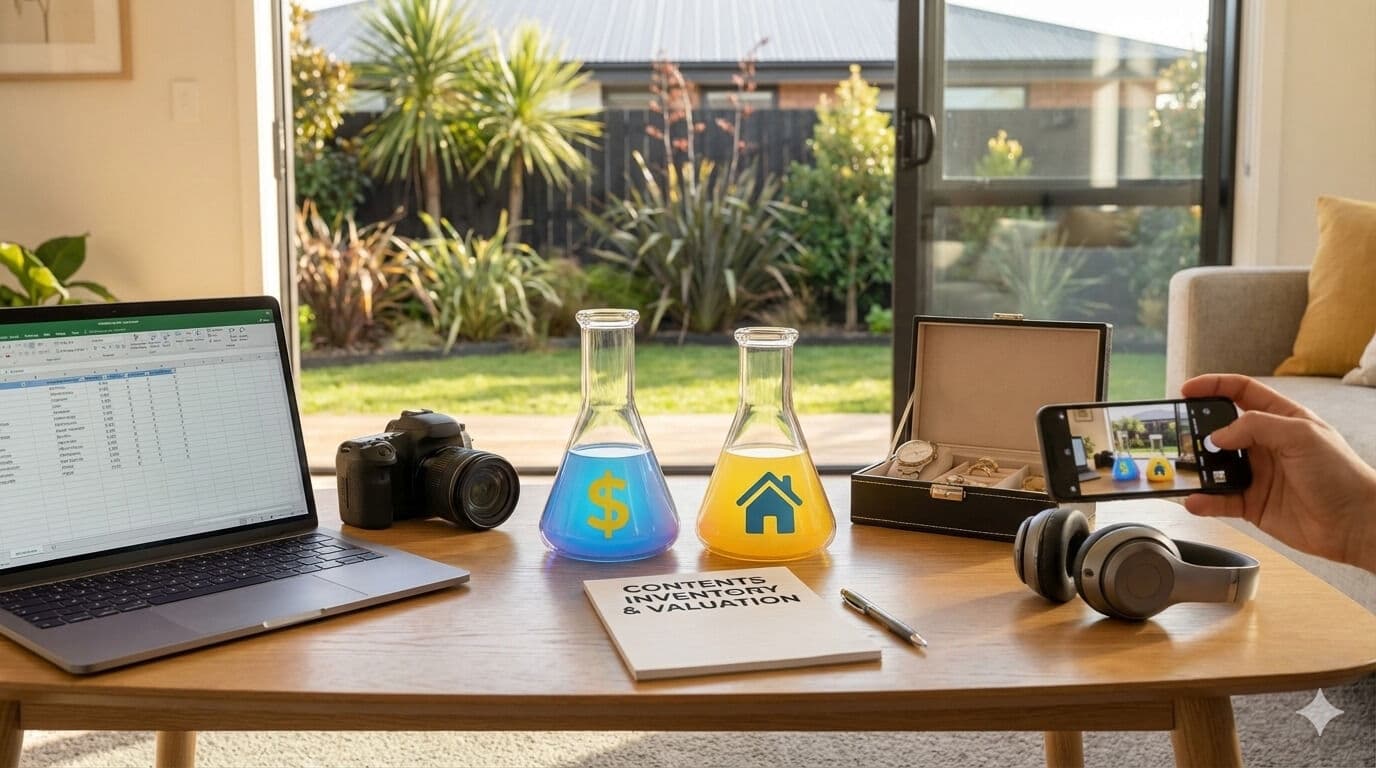
Walking through your home room by room and listing major items helps build a realistic picture. Better yet, photograph or video each room for both valuation and claims documentation purposes.
The average New Zealand household has contents worth $80,000-150,000 to replace at today's prices. Families with quality furniture, electronics, and personal items often exceed this.
Contents insurance should cover replacement value, not what you paid or what items are worth secondhand. A five-year-old television might be worth little on Trade Me, but replacing it with an equivalent new model costs hundreds of dollars.
Specific Items and Limits
Standard policies cap payouts for certain categories. Common limits include jewellery and watches (often $2,500-5,000 per item), electronics and computers (varies by policy), artworks and collections, and cash (typically very low limits).
If you own items above these limits, you need to "specify" them, listing them separately with their value. This usually means additional premium but ensures full cover.
Items with particularly high value, like engagement rings or art collections, may need standalone policies or specialist cover beyond standard contents insurance.
For Renters
Contents insurance is just as important for renters as for homeowners. Your landlord's insurance covers the building, not your belongings.
If a fire destroys the rental property, your furniture, clothing, and electronics are your problem. Contents insurance ensures you can replace them.
Tenants liability cover, included in most contents policies, also protects you if you accidentally damage the landlord's property, like putting a hole through a wall or damaging fixed flooring.
Making a Claim
If you need to claim, documentation speeds the process.
Keep receipts for major purchases where practical. Photos or videos of your home and belongings, stored somewhere safe like cloud storage, provide evidence if receipts are unavailable.
Report theft to police and get a reference number before claiming. Insurers require this for theft claims.
Do not throw out damaged items until the insurer has assessed them or approved disposal.
Small claims within your excess may not be worth claiming. Multiple small claims can affect future premiums or even your ability to get cover. Reserve claims for significant losses.
Excess and No-Claims Bonuses
Your excess is the amount you pay towards any claim before insurance kicks in. A $500 excess means you pay the first $500 of any claim.
Higher excess reduces premiums but increases your out-of-pocket cost when claiming. Choose an excess you could comfortably pay if needed.
No-claims bonuses reduce premiums for claim-free years. Making a claim typically resets this bonus, increasing future premiums even beyond the claim amount. Consider whether small claims are worth making.
Reducing Premiums
Several factors influence contents insurance premiums.
The sum insured is the primary driver. More cover costs more. But do not underinsure to save money as that defeats the purpose.
Your address affects pricing. High-crime areas cost more. Properties with security features (alarms, secure locks) may attract discounts.
The excess amount matters. Higher excess means lower premiums.
Bundling with house insurance or other policies often attracts discounts.
Claims history affects future pricing. A history of claims leads to higher premiums.
Some insurers offer online-only discounts or loyalty rewards for long-term customers.
When to Update Your Policy
Review your contents cover when circumstances change. Major purchases (new furniture, electronics, jewellery) should prompt a coverage check. Lifestyle changes (children, working from home with equipment) may increase your replacement costs. Relationship changes (partner moving in or out) affect whose belongings are covered.
An annual review ensures your sum insured keeps pace with the cost of replacing your belongings.
Choosing a Policy
Price comparison is straightforward for contents insurance since the product is relatively simple. But check policy wording for limits that might affect you, exclusions that seem unusual, and portable contents and overseas cover if relevant.
Claims service reputation matters if you ever need to claim. Industry surveys and online reviews provide some insight.
Some policies offer additional features like temporary accommodation if your home is uninhabitable, or replacement of locks if keys are stolen. These add-ons may or may not be valuable depending on your situation.
For most people, a standard contents policy from a reputable insurer with appropriate sum insured provides adequate protection. Complex situations (very high-value items, unusual collections, home-based businesses) may need specialist advice.
Need Help With Your Insurance?
Our expert advisers will help you find the best adviser for you. Get in touch to be connected with a professional insurance adviser.
Talk to an Adviser