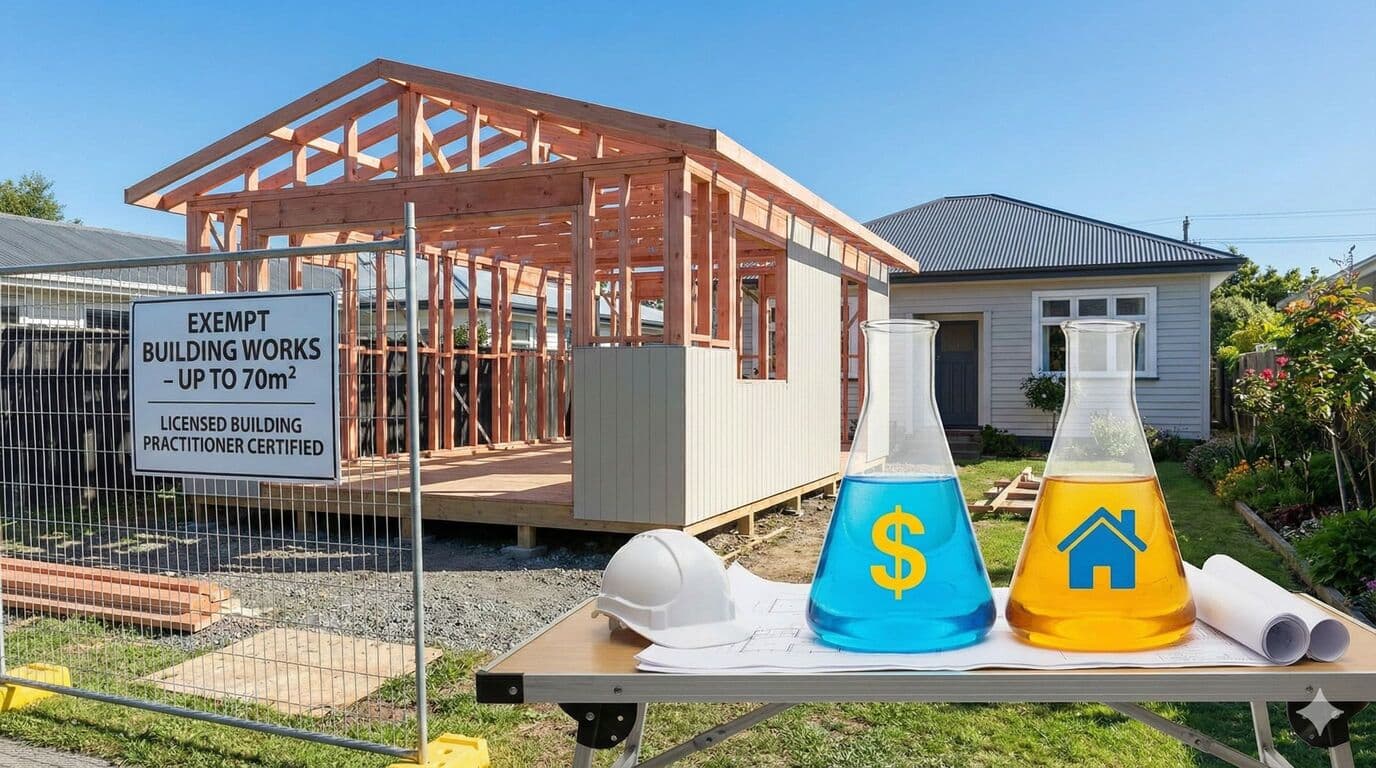
New Zealand introduced a building consent exemption for small dwellings up to 60 square metres in early 2026. This granny flat exemption aims to simplify adding secondary dwellings to properties, but the rules are more nuanced than headlines suggest. Understanding what the exemption actually allows helps you plan appropriately.
The exemption does not mean you can build without any oversight. It shifts responsibility from councils to homeowners and Licensed Building Practitioners while maintaining safety standards.
What the Exemption Covers
The exemption applies to detached, single-storey dwellings up to 60 square metres. These buildings can contain living space, bathroom, and kitchen facilities suitable for independent living. They must be on the same property as an existing dwelling.
Building consent is not required under this exemption. You do not need to lodge consent documents with council or pay consent fees. Council inspections during construction do not apply.
However, the building must still comply with the Building Code. All the standards for structural integrity, weathertightness, insulation, fire safety, and other requirements still apply. The exemption removes the consent process, not compliance requirements.
Council notification is required. While you do not need consent, you must notify your local council before construction begins. This notification allows councils to maintain records of buildings in their area and ensures compliance with district plan rules can be verified. Failure to notify may create problems when selling or insuring the property.
What You Still Need
A Licensed Building Practitioner with appropriate design competency must design the building. This is not optional. The LBP takes responsibility for ensuring the design meets Building Code requirements.
Another LBP, or the same one if appropriately licensed, must supervise and certify the construction. They confirm the building was constructed according to the design and complies with the Building Code.
You need to check district plan rules before proceeding. The building consent exemption does not override resource consent requirements. Height limits, boundary setbacks, site coverage, and other planning rules still apply. Many properties cannot accommodate a 60 square metre addition under their district plan rules.
Resource Consent May Still Apply
District plans often limit the number of dwellings on a property. Adding a granny flat may require resource consent even though building consent is exempt. This varies between councils and zones.
Subdivision rules may affect your plans. Some councils treat additional dwellings as de facto subdivision, triggering requirements for contributions and additional consents.
Heritage overlays, character zones, and special planning areas often restrict additional buildings. Check your property's planning status before assuming the exemption applies.
Site Requirements
The building must be genuinely detached from the existing dwelling. Attached additions like sleep-outs connected to the main house do not qualify for this exemption. Those still require building consent.
Services connections need proper installation. Water, wastewater, electrical, and other services must meet standards even without council inspection. Getting these wrong creates problems that may be expensive to fix.
The section must be large enough to accommodate the additional building while meeting planning rules. Minimum site sizes, maximum site coverage, and building platform requirements all affect what is possible.
Who This Suits
The exemption benefits property owners wanting to add modest accommodation for family members. Parents housing adult children, or adult children housing elderly parents, can proceed without the cost and delay of building consent.
Investment property owners may see opportunity in adding rental accommodation. However, Healthy Homes standards apply to rental properties regardless of how they were built. The granny flat must meet all rental requirements.
Those wanting to create Airbnb or short-term rental accommodation may find this option attractive. Local rules about short-term rentals still apply, but the building process is simplified.
Limitations and Risks
While council consent is not required, you must still notify your council before construction begins. This notification requirement ensures councils maintain records and can verify district plan compliance. Without proper notification, you may face difficulties with insurance, future sales, or council enforcement.
Without full council involvement, responsibility for compliance falls entirely on you and your LBP. If problems emerge years later, you cannot point to council approval as evidence of compliance.
Selling a property with an exempt building requires disclosing how it was built. Some buyers may be concerned about buildings without Code Compliance Certificates. Lenders may require additional information or valuations.
Insurance companies need to know about additional buildings on your property. Failure to disclose the granny flat could affect your cover. Some insurers may have questions about buildings without council certificates.
Getting It Right
Engage a reputable LBP with experience in exempt buildings. Their design and certification provides your primary assurance of compliance and your recourse if problems emerge.
Check resource consent requirements before assuming you can proceed. Many properties have planning constraints that make the building consent exemption irrelevant because resource consent is still required.
Document everything carefully. Without council records, you need your own documentation of design, construction, and LBP certification. This documentation protects you when selling or if issues arise.
Keep realistic expectations about cost. While consent fees are saved, design costs, construction costs, and LBP certification still apply. A 60 square metre dwelling is not cheap to build properly.
Need Help With Your Mortgage?
Our expert advisers are here to guide you through every step of your mortgage journey. Get in touch for a free, no-obligation consultation.
Talk to an Adviser