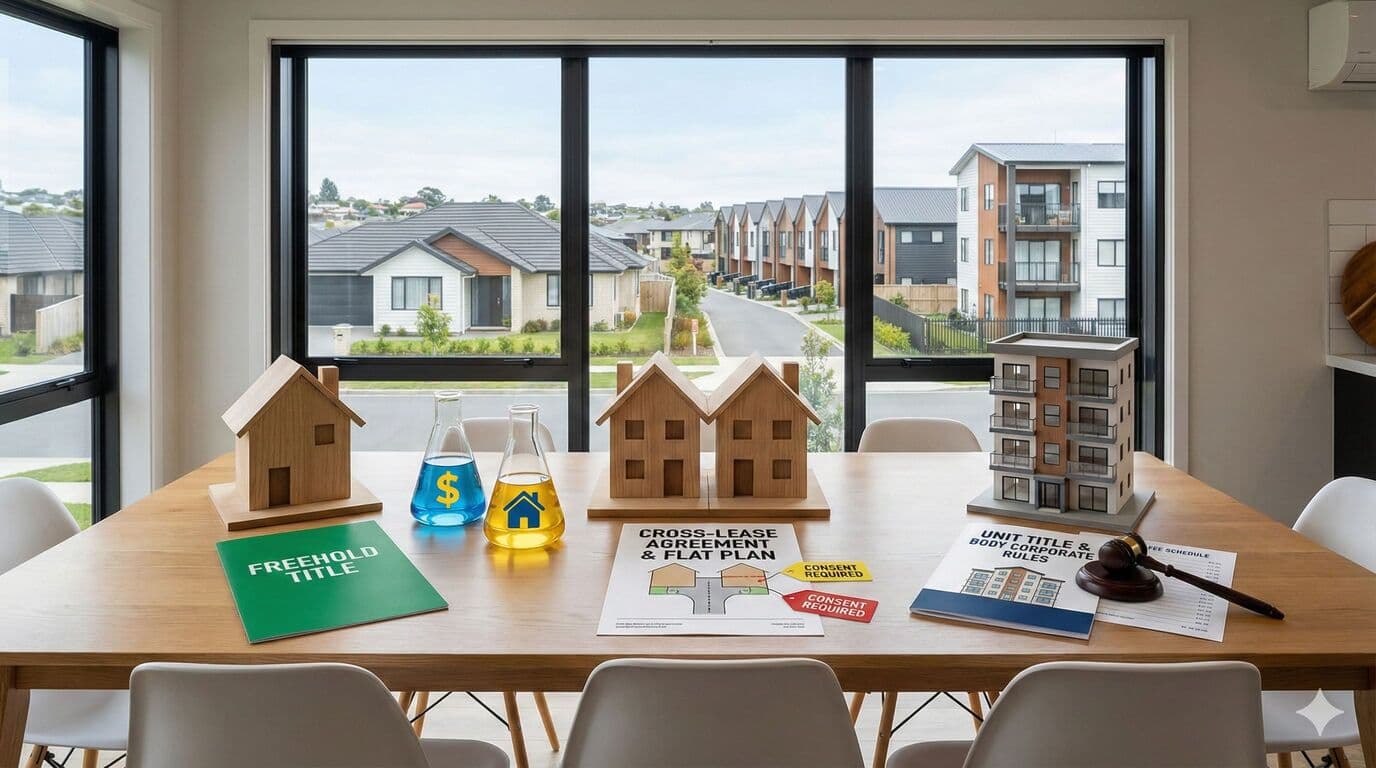
This article explains leasehold property ownership in New Zealand, distinguishing it from freehold ownership.
Definition
With leasehold, you purchase the right to occupy land and buildings for a set period rather than owning the land outright. You do not own the land your home sits on. Instead, you purchase the exclusive right to possess and use the land for a defined timeframe.
Common Locations
These properties typically appear in high-demand urban areas like Auckland's Viaduct or Mission Bay.
Financial Considerations
Ground rent represents the primary ongoing cost, reviewed every 7-21 years based on land values. Additional expenses include council rates, body corporate fees, and maintenance contributions.
Financing Challenges
Banks view leasehold properties as higher risk and typically require at least 80 years remaining on the lease, sometimes lending only 60-70% of property value.
Advantages
Lower purchase prices and access to prime locations offset the risks for some buyers.
Critical Due Diligence Questions
Prospective buyers should investigate ground rent review schedules, freehold ownership history, lease modification restrictions, and comparable sale price trends.
Key Risk
Upon lease expiration, ownership reverts to the freeholder with no compensation to the leaseholder.
Need Help With Your Mortgage?
Our expert advisers are here to guide you through every step of your mortgage journey. Get in touch for a free, no-obligation consultation.
Talk to an Adviser