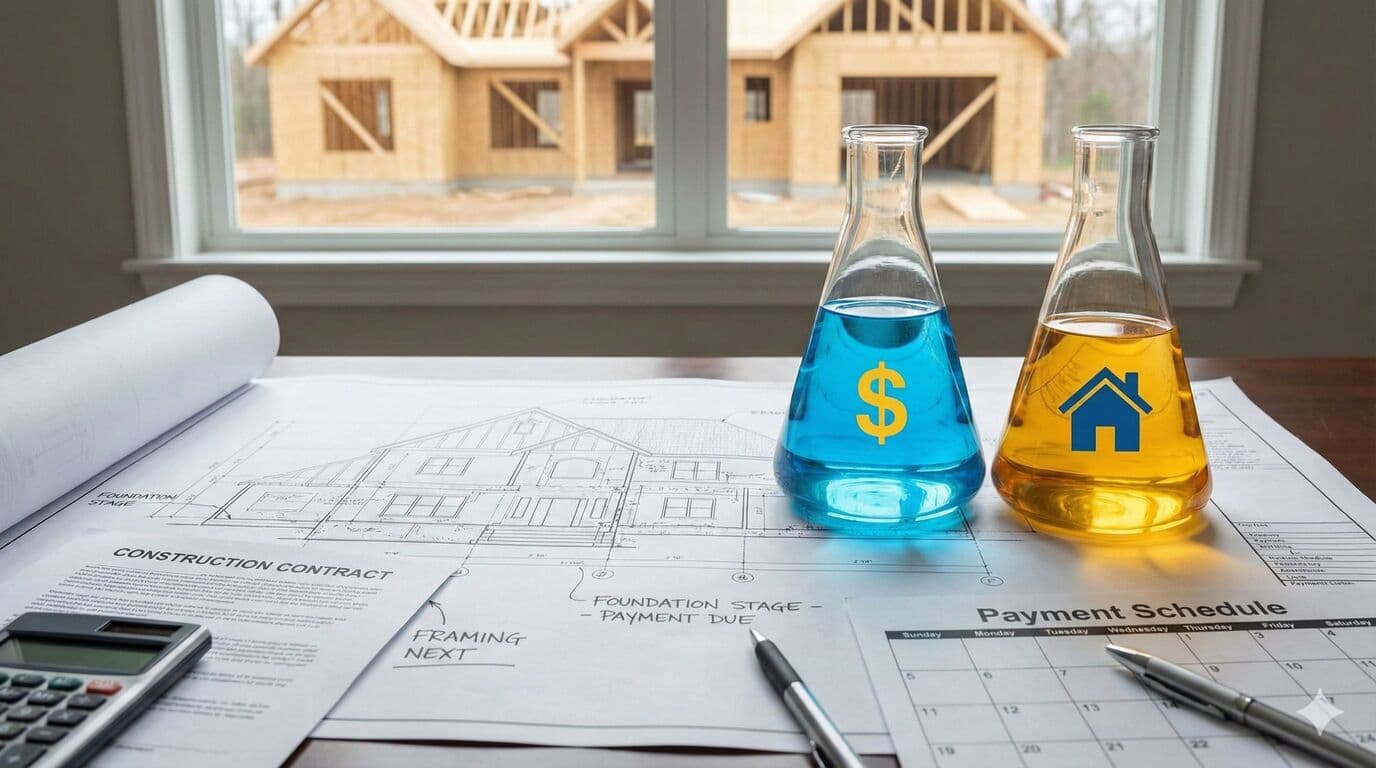
Progress payments structure how money flows during your construction project. Rather than paying the full amount at completion, you make payments at defined stages as work advances. Understanding this system helps you manage cash flow and protect your interests throughout the build.
The progress payment approach benefits both parties. Builders receive funds to cover their costs as work proceeds. Buyers pay only for completed work rather than advancing large sums before seeing results.
Typical Payment Stages
Construction contracts define payment milestones, typically including five to seven stages. While contracts vary, a common structure includes:
The initial deposit, usually 5 to 10 percent of the contract price, is paid when signing the construction contract. This secures your place in the builder's schedule and covers their initial costs.
Foundation stage payment follows completion of foundations. This typically amounts to 10 to 15 percent and is payable when floor slab or subfloor structure is complete.
Framing stage covers the structural frame including walls, roof framing, and windows installed. This payment of 15 to 25 percent recognises substantial progress in the building's structure.
Lockup or closed-in stage marks when the building is weathertight with roofing and cladding complete. Payment at this stage, often 15 to 20 percent, reflects the building's protection from elements.
Fixing stage covers internal work including linings, internal doors, kitchen and bathroom installation. This 15 to 20 percent payment comes as the home takes recognisable shape.
Practical completion is the final payment, typically 10 to 15 percent, payable when the house is complete and ready for occupation.
How Payments Work With Your Mortgage
Your construction loan releases progressively to match contract payments. Each stage payment requires a drawdown request to your bank.
The process involves notifying your bank that a stage is complete, the bank may arrange inspection or valuation, and upon satisfaction, funds release to the builder. Turnaround typically takes several days.
Your builder expects payment within contracted timeframes after completing each stage. Delays in bank processing can create tension. Understanding likely processing times helps set appropriate expectations.
Inspecting Before Payment
Each progress payment represents an opportunity to verify work quality before paying. You have the right to inspect completed work and raise concerns before authorising payment.
Contract terms specify what happens if you identify defects. Generally, the builder must remedy identified issues. Payment for that stage may be withheld until remediation is complete, though you cannot withhold disproportionately for minor issues.
Engaging a building inspector at key stages provides independent verification. Their fees are modest relative to the sums involved, and their expertise identifies issues you might miss.
Variations and Their Impact
Changes during construction create variations that affect payment schedules. Additional work or upgraded specifications typically require payment outside the standard progress payments.
Variation costs should be documented and agreed before work proceeds. Receiving invoices for variations you did not authorise creates disputes. Clear communication about changes prevents problems.
Some variations reduce costs, creating credits. These should equally be documented and reflected in adjusted payments.
Managing Cash Flow
Progress payments create cash flow requirements at unpredictable intervals. Construction pace varies with weather, material availability, and builder capacity. Payments may cluster or spread depending on how work proceeds.
Maintaining accessible funds for payments prevents delays. If you are waiting on bank drawdowns, ensure your builder understands the process and typical timeframes.
Costs outside the construction contract also arise during the build period. Council fees, professional fees, and selections above allowances all require payment. Budget for these alongside progress payments.
Protecting Yourself
Never pay ahead of completed work. Paying for stages not yet finished creates risk if the builder fails to complete. Each payment should reflect work actually done.
Retain documentation of all payments. Bank records, invoices, and receipts provide evidence if disputes arise. Photograph work at each stage before authorising payment.
Understand the final retention. Many contracts withhold a percentage until defects liability period ends. This retention ensures the builder returns to fix problems discovered after practical completion.
When Things Go Wrong
Payment disputes can halt construction. If you withhold payment due to concerns, the builder may stop work. If the builder demands payment for incomplete stages, you face pressure to pay or face delays.
Clear contract terms reduce dispute risk. Understanding exactly what constitutes completion of each stage prevents disagreement about whether payment is due.
If disputes arise, seek resolution promptly. Construction disputes that drag on create stress and cost for both parties. Mediation or other dispute resolution processes can help reach agreement.
Progress payments work well when both parties understand and honour the system. Clear documentation, timely communication, and reasonable behaviour on both sides enable smooth construction and successful completion.
Need Help With Your Mortgage?
Our expert advisers are here to guide you through every step of your mortgage journey. Get in touch for a free, no-obligation consultation.
Talk to an Adviser