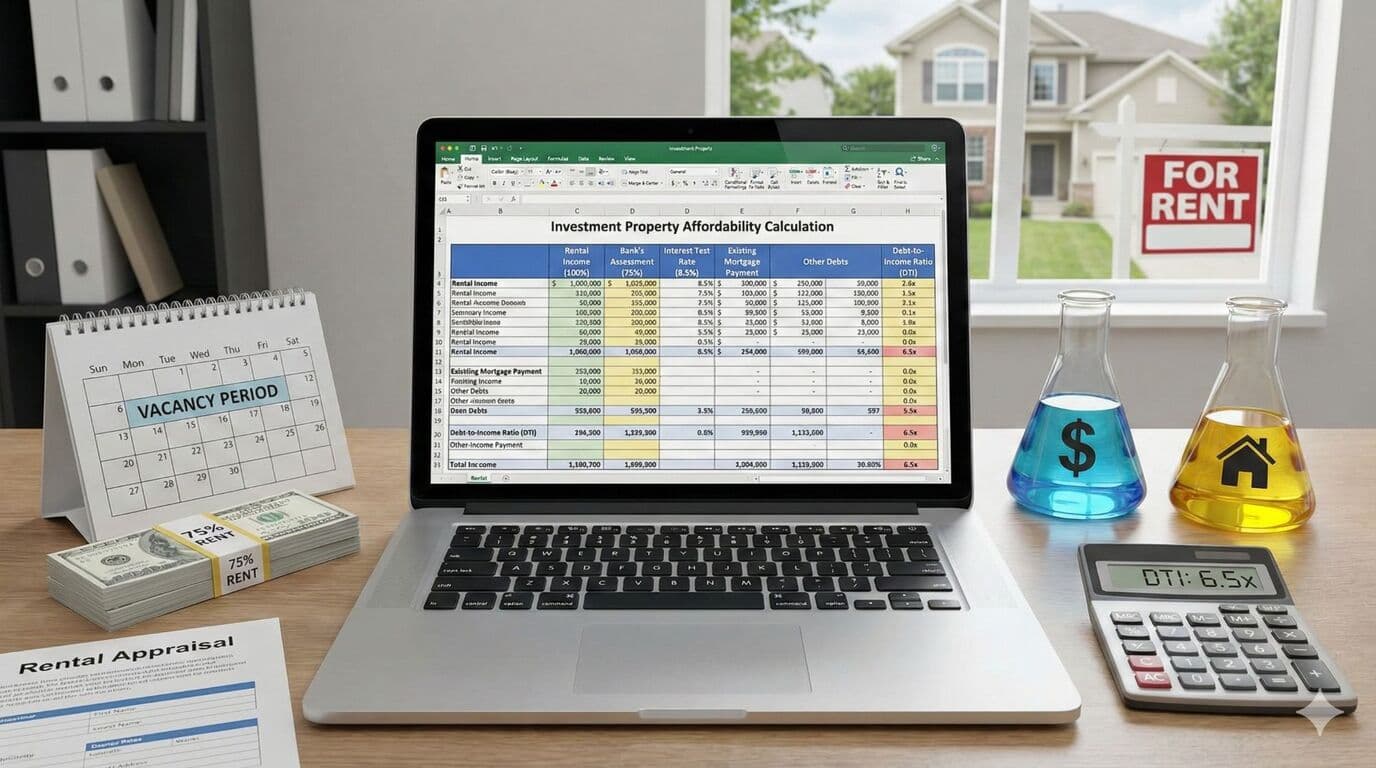
Banks apply different assessment criteria for investment properties compared to owner-occupied homes. Understanding these calculations helps investors plan effectively.
The Rental Income Factor
Banks don't count 100% of expected rental income. Most use 70-80% of market rent to account for vacancies, maintenance, and property management costs. This conservative approach protects both lender and borrower.
Interest Rate Testing
Lenders assess affordability using test rates higher than current market rates-typically 8-9%. This ensures borrowers can manage repayments if rates increase significantly.
Existing Debt Servicing
Your current mortgage repayments, including on your own home, factor into the calculation. Investment property debt adds to your total servicing requirements.
The DTI Factor
Debt-to-income ratios have become increasingly important. For investment lending, borrowing is considered high-DTI if it exceeds 7 times annual gross income, minus any other debt. Banks still apply serviceability, deposit, rental-income treatment, and other lending criteria, so DTI is one part of the assessment rather than a standalone borrowing limit.
Positive vs Negative Gearing
Properties where rent covers expenses demonstrate better serviceability. Negatively geared properties require you to cover shortfalls from other income, reducing overall borrowing capacity.
Improving Your Position
To strengthen investment property applications: maximize your income documentation, reduce personal debt, consider properties with strong rental yields, and maintain a conservative loan-to-value ratio on existing properties.
Professional Guidance
Investment property lending involves complex calculations across multiple factors. A mortgage adviser can model different scenarios and identify the optimal approach for your circumstances.
Need Help With Your Mortgage?
Our expert advisers are here to guide you through every step of your mortgage journey. Get in touch for a free, no-obligation consultation.
Talk to an Adviser