The biggest barrier to buying your first home often isn't money - it's mindset. When property prices feel impossibly high and deposits seem unreachable, it's easy to give up before you even start.
But here's the truth: we've helped thousands of New Zealanders buy their first home, including people who never thought they could. Solo buyers, couples on modest incomes, large families, career changers, and first-time buyers in their 50s. What they all had in common wasn't wealth - it was the right mindset.
Mindset Shift #1: Believe It's Possible
This sounds simple, but it's foundational. If you've already decided homeownership isn't for you, you won't take the steps required to get there.
Reframe the challenge. "I'll never save $100,000" becomes "I need to save $800/month for 10 years" or "I can start with 10% and use the First Home Loan." "I can't afford Auckland" becomes "Which suburbs or regions match my budget?" "I'm too old to start" becomes "Better at 45 than never."
The people who succeed are those who approach obstacles as problems to solve, not reasons to quit.
Mindset Shift #2: Embrace the Long Game
Buying a home is rarely quick. For most first-home buyers, the journey takes 2-5 years of intentional effort.
What this means practically is that delayed gratification becomes normal, not exceptional. Every spending decision is weighed against your goal. Setbacks like job changes, unexpected expenses, and market shifts are absorbed and overcome. Progress is measured in months and years, not weeks.
This isn't deprivation - it's prioritisation. You're choosing future stability over present convenience.
Mindset Shift #3: Get Comfortable with Uncertainty
Property markets fluctuate. Interest rates change. Your circumstances will evolve. Waiting for "perfect conditions" means waiting forever.
Successful first-home buyers accept that they can't time the market perfectly, their first home won't be their dream home, plans will need to adapt as circumstances change, and some uncertainty is unavoidable. The goal isn't certainty - it's making smart decisions with the information available.
Mindset Shift #4: Seek Help Early (Not When You're "Ready")
Many people wait to talk to a mortgage adviser until they think they're close to buying. This is backwards.
Early conversations with an adviser help you understand your actual borrowing capacity, which is often different from what you assume. You can identify obstacles you can address now, such as credit issues, debt, and savings patterns. You'll learn about options you didn't know existed, like using KiwiSaver for your deposit or family guarantees. You can create a realistic timeline based on your specific situation.
The consultation is free, and it replaces guesswork with a clear plan. Get started with a free assessment.
Mindset Shift #5: Focus on What You Can Control
You can't control property prices, interest rates, or the economy. But you can control several important factors.
Your savings rate makes a difference. Use a deposit savings calculator to see how different savings amounts affect your timeline. Even an extra $50/week makes a difference over time.
Your spending patterns matter. Track your expenses with a budget calculator. Small leaks add up - subscriptions you don't use, dining out that adds no real value, impulse purchases that you forget about within a week.
Your debt position is crucial. Pay down high-interest debt first. Credit cards reduce your borrowing capacity more than most people realise - $10,000 in credit limits can reduce what you can borrow by $50,000-60,000.
Your income can grow. Ask for raises. Pursue promotions. Consider side income. Income growth directly increases borrowing capacity.
Your knowledge helps you make better decisions. The more you understand about the home buying process, the better decisions you'll make. Read articles like this one. Talk to professionals. Ask questions.
Mindset Shift #6: Celebrate Progress, Not Just Achievement
Waiting until you buy a house to feel successful makes the journey miserable. Instead, celebrate milestones like your first $10,000 saved, credit card fully paid off, pre-approval obtained, budget surplus sustained for three months, and first open home attended. These wins build momentum and reinforce the habits that will eventually get you across the line.
Mindset Shift #7: Separate "Expensive" from "Impossible"
Property prices in New Zealand are high. That's reality. But high prices don't mean impossible - they mean you need to be strategic.
Strategic approaches include starting in more affordable suburbs or regions, considering apartments or townhouses instead of standalone houses, buying with a partner, family member, or friend, using the First Home Loan for a 5% deposit option, and building new which often has lower deposit requirements.
The question isn't "Can I afford a $1.2M house in Ponsonby?" It's "What can I actually afford, and where?"
The Practical Next Steps
Mindset without action is just daydreaming. Here's how to translate these shifts into progress.
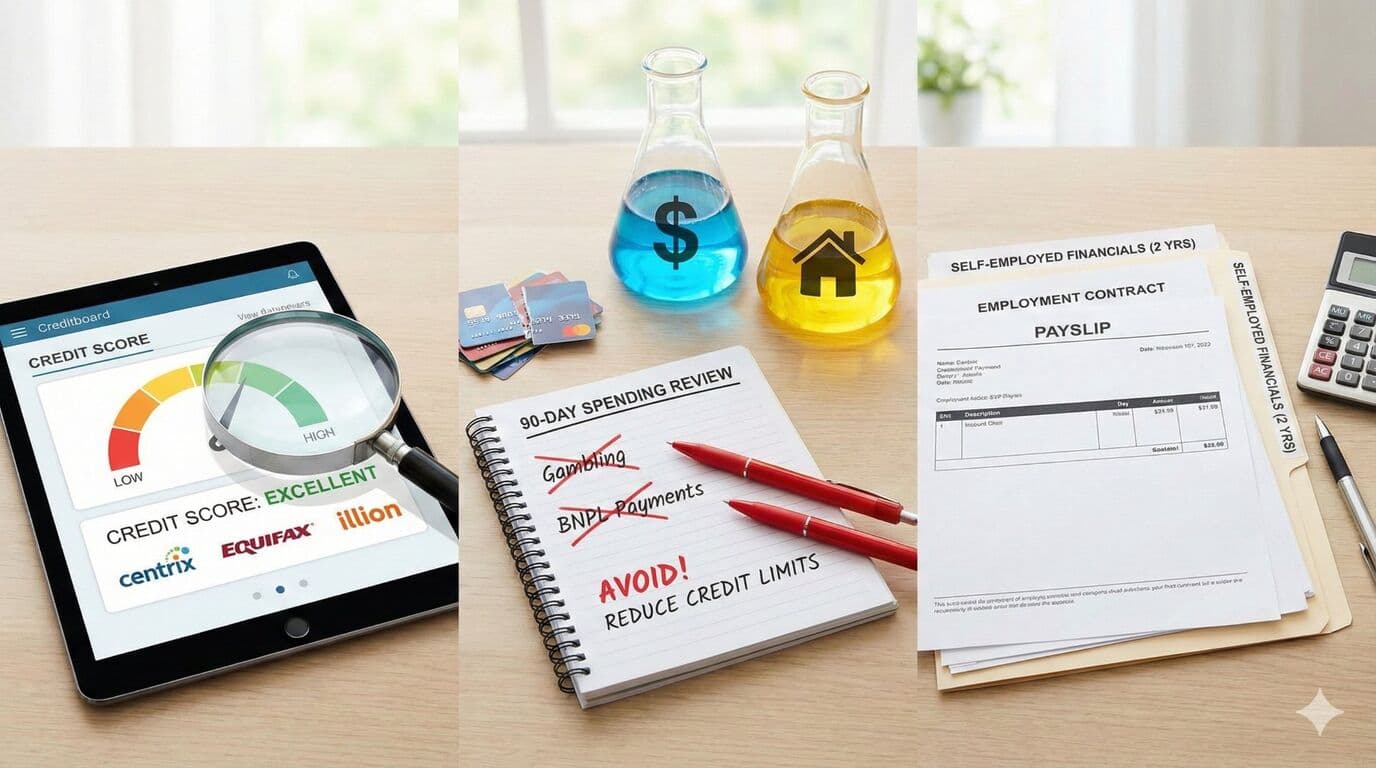
This week, check your credit report for free through Centrix, Equifax, or illion. Calculate your current net worth by subtracting debts from assets. Set up a dedicated savings account for your deposit.
This month, talk to a mortgage adviser about your borrowing capacity. Create a monthly budget and identify savings opportunities. Start automatic transfers to your deposit savings on payday.
This quarter, reduce or close unused credit cards and pay down any high-interest debt. Research suburbs in your likely price range and attend open homes to understand the market.
Your Path, Your Pace
The path to homeownership is different for everyone. Some people save aggressively for two years. Others take a decade of gradual progress. Some buy with 5% deposit through the First Home Loan; others save 20% to avoid low equity premiums.
What unites successful first-home buyers isn't their income, their age, or their family wealth. It's their mindset: the belief that homeownership is possible, combined with the discipline to make consistent progress toward that goal.
You don't need to be rich. You need to be committed.
Need Help With Your Mortgage?
Our expert advisers are here to guide you through every step of your mortgage journey. Get in touch for a free, no-obligation consultation.
Talk to an Adviser