If you're fortunate enough to have owned a house for several years, property appreciation has likely increased your wealth. While market conditions vary year to year, long-term property ownership in New Zealand has historically built equity through both capital growth and mortgage repayments.
1. Can You Actually "Move Up" When Buying and Selling in the Same Market?
Absolutely. Selling positions you more favorably than when you initially purchased. Extended ownership means a reduced mortgage balance and presumably higher earnings. Getting mortgage approval for an upgrade should prove considerably easier than securing your first home loan.
2. Can You Move to a Cheaper City?
Relocating to more affordable regions means acquiring superior properties without mortgage increases. Consider Hawke's Bay, Taranaki, Gisborne, wider Canterbury, or the West Coast.
3. Do You Have to Sell Your Current Property Before Buying?
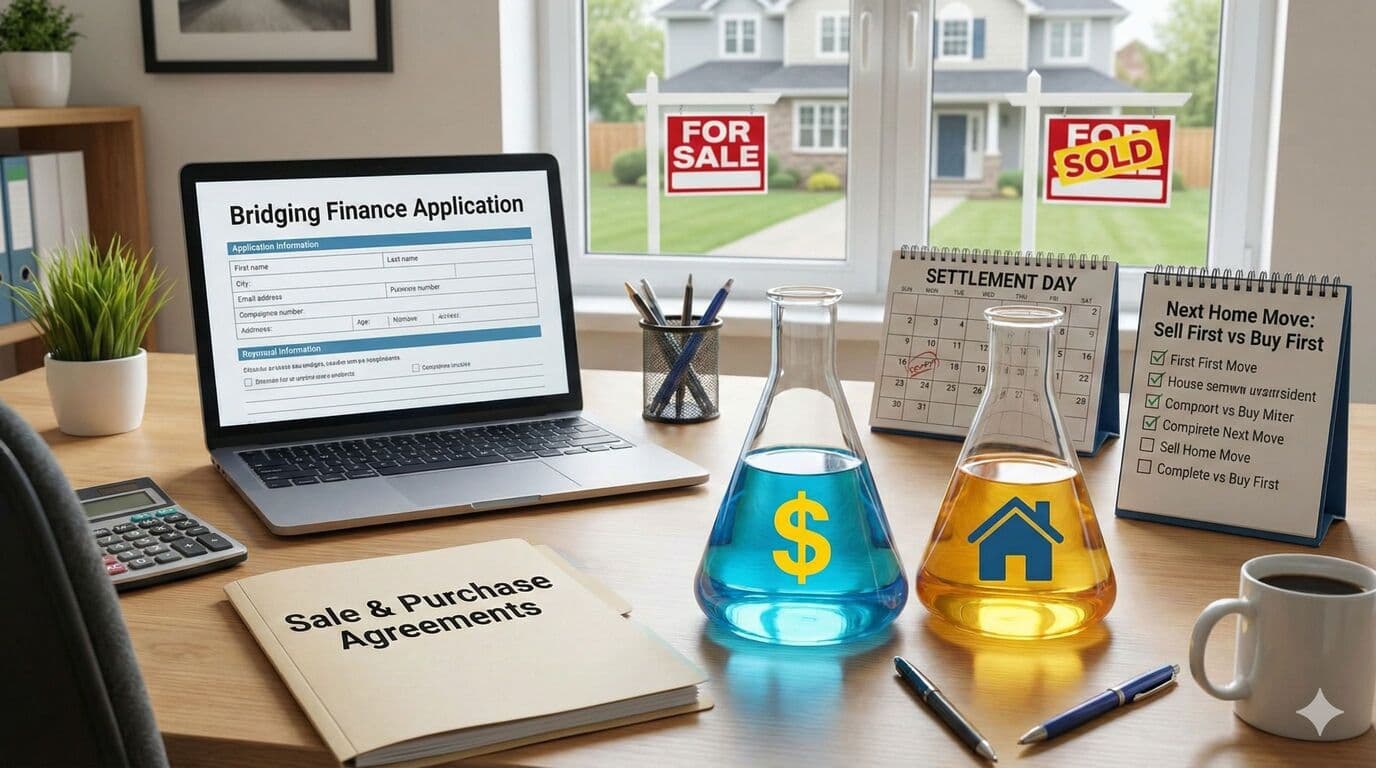
Banks provide bridging financing, permitting property purchases before existing home sales.
Key terminology:
- •Open bridge: A bridging loan facilitating new home purchases without a specific sale date
- •Closed bridge: A bridging loan with a confirmed sale date
4. Should You Keep Your Current Property as a Rental?
Consider retaining your existing home as an investment if sufficient equity exists. However, residential properties aren't necessarily optimal investments. Ideal rental properties require minimal maintenance and deliver favorable rent-to-mortgage yields.
Finally
Interest rates fluctuate over time. Regardless of current rates, upgrading should be based on your long-term financial capacity and goals, not short-term market conditions.
Need Help With Your Mortgage?
Our expert advisers are here to guide you through every step of your mortgage journey. Get in touch for a free, no-obligation consultation.
Talk to an Adviser