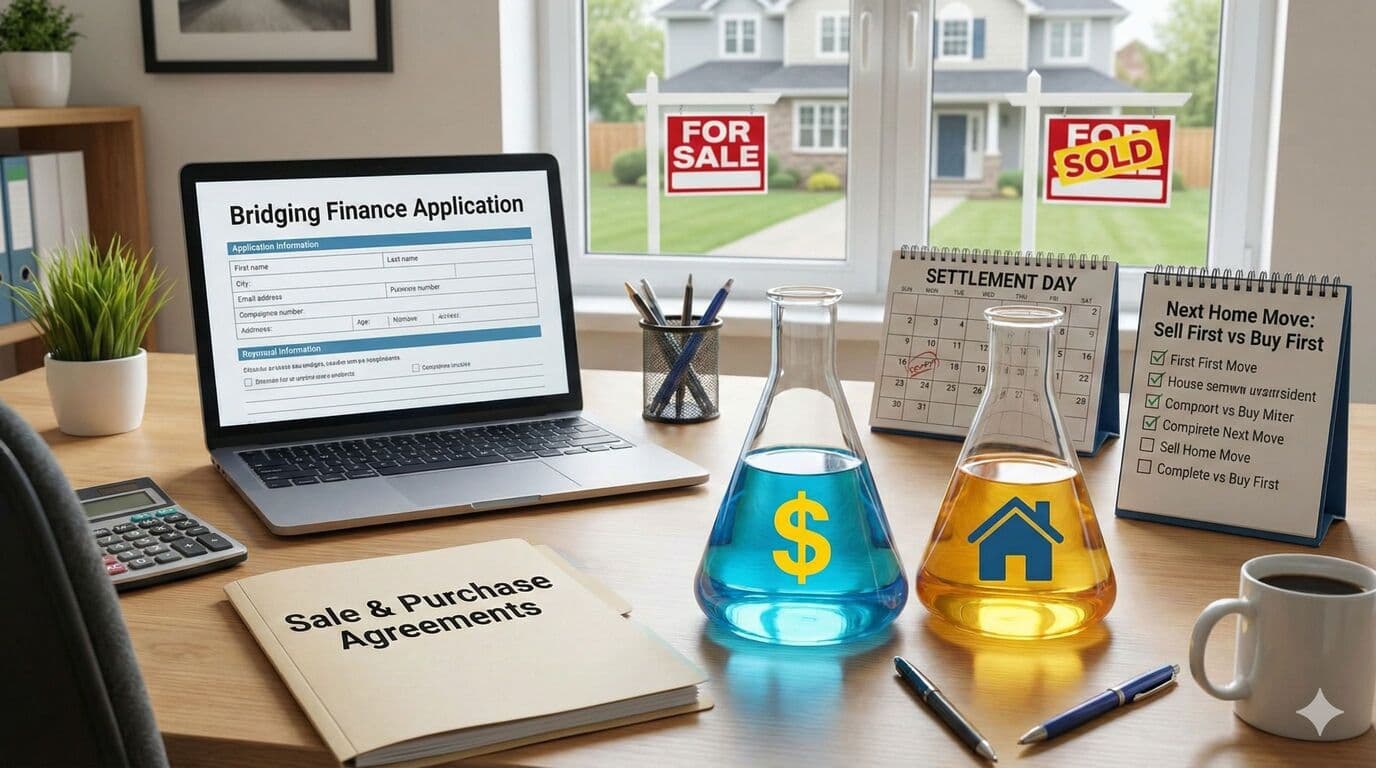
Buying your second (or third, or fourth) home is different from buying your first. You've got equity to leverage, a property to coordinate, and more complex decisions to make. Here's what you need to know about navigating the move from one home to the next.
The Central Question: Buy First or Sell First?
This is the biggest decision you'll face, and there's no universally right answer. Each approach has trade-offs.
Option One: Buy Before You Sell
If you find your dream home before selling your current one, you have two main options.
A conditional offer involves making an offer on the new property conditional on selling your existing home. This protects you from owning two properties simultaneously, but it may be less attractive to vendors, especially in a competitive market.
Bridging finance is a short-term loan that allows you to buy the new property before selling the old one. A closed bridge applies when you have an unconditional sale on your current property, so the bank knows exactly when funds will be available, making it lower risk and lower cost. An open bridge applies when your property isn't sold yet, with the bank lending based on an expected sale within a set timeframe of typically 6-12 months. This is higher risk, higher cost, and usually capped at 80% of your current home's value.
Bridging costs to consider include interest on the bridge amount (often at a higher rate), establishment fees, and the stress of two mortgage payments if your sale takes longer than expected.
Option Two: Sell First, Then Buy
Selling your existing property first gives you certainty: you know exactly how much you have to spend, and you can make unconditional offers on new properties.
This approach means no bridging costs, a clear budget based on confirmed sale proceeds, and a stronger negotiating position as a "ready" buyer.
However, there are challenges. You may need temporary accommodation between properties, such as staying with family or renting short-term. There will be storage costs for your belongings and the pressure of finding a new home within your settlement timeframe. You also risk potentially buying in a rising market after selling in a lower one.
Accessing Your Equity
When you already own a home, your equity becomes a powerful tool. Equity is the difference between your home's value and what you owe on it. For example, if your home value is $900,000 and your mortgage owing is $400,000, your equity is $500,000.
Banks typically lend up to 80% of property value, so your usable equity might be around $320,000 (80% of $900,000 = $720,000, minus $400,000 owed). This equity can fund your deposit on the next property, cover bridging finance, or help with transaction costs.
What's Changed Since You First Bought?
Don't assume everything works the same as your first purchase. Consider whether your income and expenses have changed significantly. Look at your debt levels and whether you have new car loans, credit cards, or BNPL accounts. Bank policies and lending criteria may be stricter than when you first bought. LVR rules still apply, though you may have more equity to work with. Market conditions including interest rates, property values, and competition levels may be different.
Get a fresh pre-approval before you start seriously looking.
Due Diligence Still Matters
Even experienced homeowners should complete thorough due diligence. Get a LIM report to check for council compliance, hazards, and planned works. Arrange a building inspection, especially for older properties. Complete a title check for easements, covenants, and rights that affect the property. Ensure the property is insurable before going unconditional.
Coordinating Settlement Dates
Ideally, your sale settlement and purchase settlement happen on the same day. This minimises temporary accommodation needs and double-handling of belongings.
Work with your lawyer and mortgage adviser to align dates. If perfect alignment isn't possible, negotiate short-term arrangements such as settlement extensions or early possession agreements to bridge any gaps.
More Moving Parts, More to Gain
Buying your next home involves more moving parts than your first purchase, but you also have more resources to work with. Plan carefully, get professional advice, and don't underestimate the value of having your existing property sale confirmed before committing to the next one.
Your mortgage adviser is there to help at every step - through the paperwork, the what-ifs, and the excitement of moving day.
Need Help With Your Mortgage?
Our expert advisers are here to guide you through every step of your mortgage journey. Get in touch for a free, no-obligation consultation.
Talk to an Adviser