As of 1 July 2025, all private rental properties in New Zealand must comply with the Healthy Homes Standards. If you own an investment property or are considering becoming a landlord, understanding these requirements is essential-both to avoid penalties and to provide safe, healthy housing for your tenants.
What Are the Healthy Homes Standards?
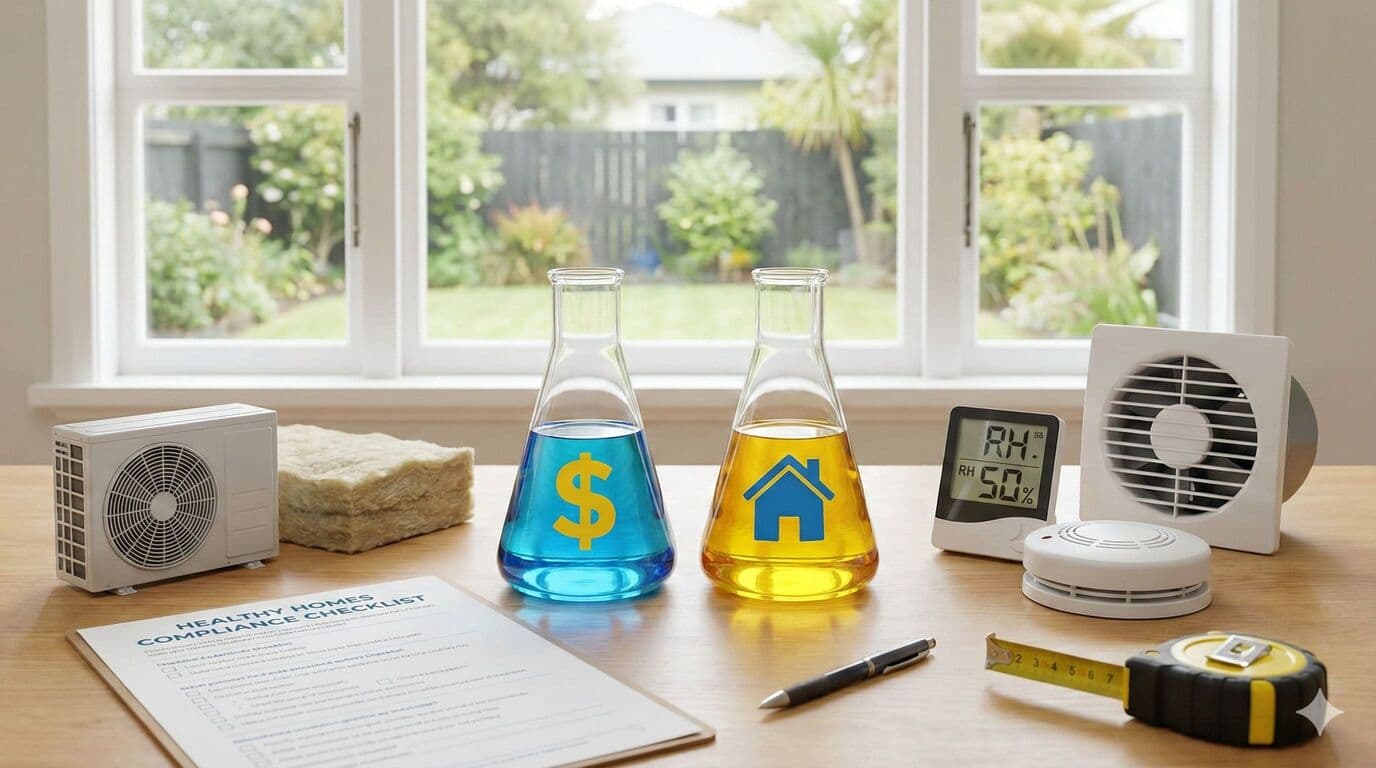
The Healthy Homes Standards are minimum requirements for heating, insulation, ventilation, moisture and drainage, and draught stopping in rental properties. They were introduced to ensure rental homes are warm, dry, and safe for tenants.
These standards apply to all private rentals, boarding houses, and Kainga Ora (Housing New Zealand) properties. Non-compliance can result in significant fines-up to $7,200 per breach for smaller landlords and up to $50,000 per breach for larger landlords with six or more properties.
The Five Minimum Standards
1. Heating Standard
Your rental must have a fixed heating device in the main living room that can warm the space to at least 18°C. The heating capacity required depends on the room size and location within New Zealand.
What Qualifies as Acceptable Heating
Heat pumps are the most common solution and typically the most cost-effective to run. Wood burners and pellet burners are acceptable, as are flued gas heaters and central heating systems. Electric heaters can qualify provided they have adequate wattage for the room size.
What Does Not Qualify
Unflued gas heaters are banned in bedrooms and not recommended for living areas due to moisture and safety concerns. Portable electric heaters cannot be the sole heating source. Open fireplaces without effective heating capacity also do not meet the standard.
Typical Heating Costs
Heat pump installation ranges from $3,500 to $7,500 depending on the unit size and installation complexity. Warmer Kiwi Homes grants may cover up to $3,000 for eligible properties.
Use our borrowing power calculator to factor compliance costs into your investment planning.
2. Insulation Standard
Ceiling and underfloor insulation is compulsory in all rental homes.
Ceiling Insulation
The minimum R-value depends on your climate zone. For Zones 1-3, the minimum is R 2.9. Insulation must be installed where it is reasonably practicable to do so.
Underfloor Insulation
A minimum R-value of 1.3 applies across all climate zones, where there is reasonable access to install it.
Exemptions and Modifications
From 25 September 2025, homes with limited roof space may still comply if they have extra insulation elsewhere. Properties where installation is not reasonably practicable, such as those with concrete slab floors, have modified requirements.
Typical Insulation Costs
Full insulation installation ranges from $2,500 to $6,000 depending on house size and accessibility. Warmer Kiwi Homes may provide partial funding for eligible properties.
3. Ventilation Standard
Adequate ventilation helps prevent moisture build-up and mould growth.
All living rooms, dining rooms, kitchens, and bedrooms must have opening windows. Kitchens, bathrooms, and laundries require extractor fans, with rangehoods acceptable for kitchens. Critically, all fans must vent to outside rather than into the roof space.
Installing a compliant extractor fan typically costs $200 to $500 per unit, and most properties require two or three fans to achieve compliance.
4. Moisture and Drainage Standard
This standard prevents water damage and moisture ingress.
Properties must have efficient drainage for surface water, groundwater, and stormwater. Gutters, downpipes, and drains must all be in good working condition. There should be no obvious signs of leaks or water damage. Where enclosed subfloor spaces exist, a ground moisture barrier is required.
Costs vary significantly depending on the issues present. Basic gutter repairs might cost $500 to $1,000, while major drainage work could exceed $5,000.
5. Draught Stopping Standard
Landlords must block noticeable draughts from gaps or holes in walls, ceilings, windows, doors, and floors.
There must be no unreasonable gaps around windows and doors, and no holes in walls, ceilings, or floors. Any unused chimneys must be blocked, and gaps around pipes and cables must be sealed.
Draught stopping is generally the least expensive standard to meet, typically costing $200 to $800 for most properties using weather stripping, gap fillers, and chimney balloons.
Total Compliance Cost Estimates
| Property Condition | Estimated Cost |
|---|---|
| Nearly compliant (minor work) | $1,000 - $3,000 |
| Moderate work required | $5,000 - $10,000 |
| Significant work required | $10,000 - $20,000+ |
| Major renovation needed | $20,000+ |
When purchasing an investment property, factor these costs into your due diligence. Use our deposit savings calculator to plan for both purchase and compliance expenses.
Compliance Statement Requirements
Every new, renewed, or varied tenancy agreement must include a Healthy Homes compliance statement. This statement details the property's current level of compliance with each of the five standards.
The statement must be included with every new tenancy agreement and updated whenever tenancies renew or vary. Failure to include the statement can result in a $500 fine per tenancy. Because the statement is a legal declaration, making false statements carries additional penalties.
Penalties for Non-Compliance
The Tenancy Tribunal and Tenancy Services Compliance and Investigations Team actively enforce these standards.
| Landlord Type | Maximum Penalty Per Breach |
|---|---|
| Smaller landlords (1-5 properties) | $7,200 |
| Larger landlords (6+ properties) | $50,000 |
In 2024, close to half of proactive assessments identified Healthy Homes Standards breaches. Enforcement has intensified significantly since the July 2025 deadline.
How Enforcement Is Triggered
The most common trigger is tenant complaints to Tenancy Services. MBIE also conducts proactive inspections. Issues frequently arise during Tenancy Tribunal disputes over other matters, and property manager audits can identify non-compliance that must then be addressed.
Exemptions
There are limited situations where landlords may not need to comply.
Demolition Planned
If the property is scheduled for demolition or substantial rebuilding within 12 months, an exemption may apply.
Seller Leaseback
Where the tenant is the immediate former owner of the property, an exemption applies for the first 12 months only.
Shared Ownership
Where the rental unit is part of a larger building the landlord does not own-such as an apartment in a building where the landlord owns only one unit-modified requirements may apply.
These exemptions are narrow, and most landlords must comply fully with all five standards.
Inspections and Documentation
Maintaining thorough records of your compliance efforts is essential for protecting yourself legally.
What to Document
Keep receipts for all heating, insulation, and ventilation work. Take photos of completed work and retain compliance certificates from installers. Energy efficiency assessments and property inspection reports should all be filed and kept accessible.
Inspection Frequency
Conduct compliance checks at least annually and before each new tenancy begins. This protects you legally and ensures ongoing compliance with the standards.
Investment Property Considerations
When evaluating investment properties, Healthy Homes compliance should factor into your purchase decision.
Due Diligence Before Buying
Request a Healthy Homes assessment as part of your due diligence process. Factor any compliance costs into your purchase budget and check whether existing compliance documentation is available. Consider carefully how compliance costs will affect your rental yield.
Impact on Returns
A property requiring $15,000 in compliance work effectively costs $15,000 more than its purchase price. If you are buying a $600,000 property with a $200,000 deposit, adding $15,000 in compliance costs increases your total investment to $215,000-reducing your potential rental yield accordingly.
What To Do If Your Property Is Not Compliant
If your rental property does not currently meet Healthy Homes Standards, take immediate action.
Assess and Prioritise
Start by assessing your property against each of the five standards. Prioritise heating and insulation as these are the most commonly failed requirements and have the biggest impact on tenant health and comfort.
Get Quotes and Check for Subsidies
Obtain quotes from qualified installers for all required work. Check whether you qualify for subsidies through Warmer Kiwi Homes or your local council, as these can significantly reduce your costs.
Complete Work and Document
Once work is complete, document everything thoroughly with photos, receipts, and compliance certificates. Update your compliance statement for current and future tenancies to reflect the completed upgrades.
Getting Help
For property investors uncertain about compliance requirements or costs, professional advice is valuable.
Many property managers offer Healthy Homes assessments and can coordinate compliance work on your behalf. Energy assessors can evaluate the specific heating requirements for your property based on room size and location. Building inspectors can identify all compliance issues in a single inspection. Mortgage advisers can help structure lending to cover compliance costs as part of your property purchase.
Need Help With Your Mortgage?
Our expert advisers are here to guide you through every step of your mortgage journey. Get in touch for a free, no-obligation consultation.
Talk to an Adviser