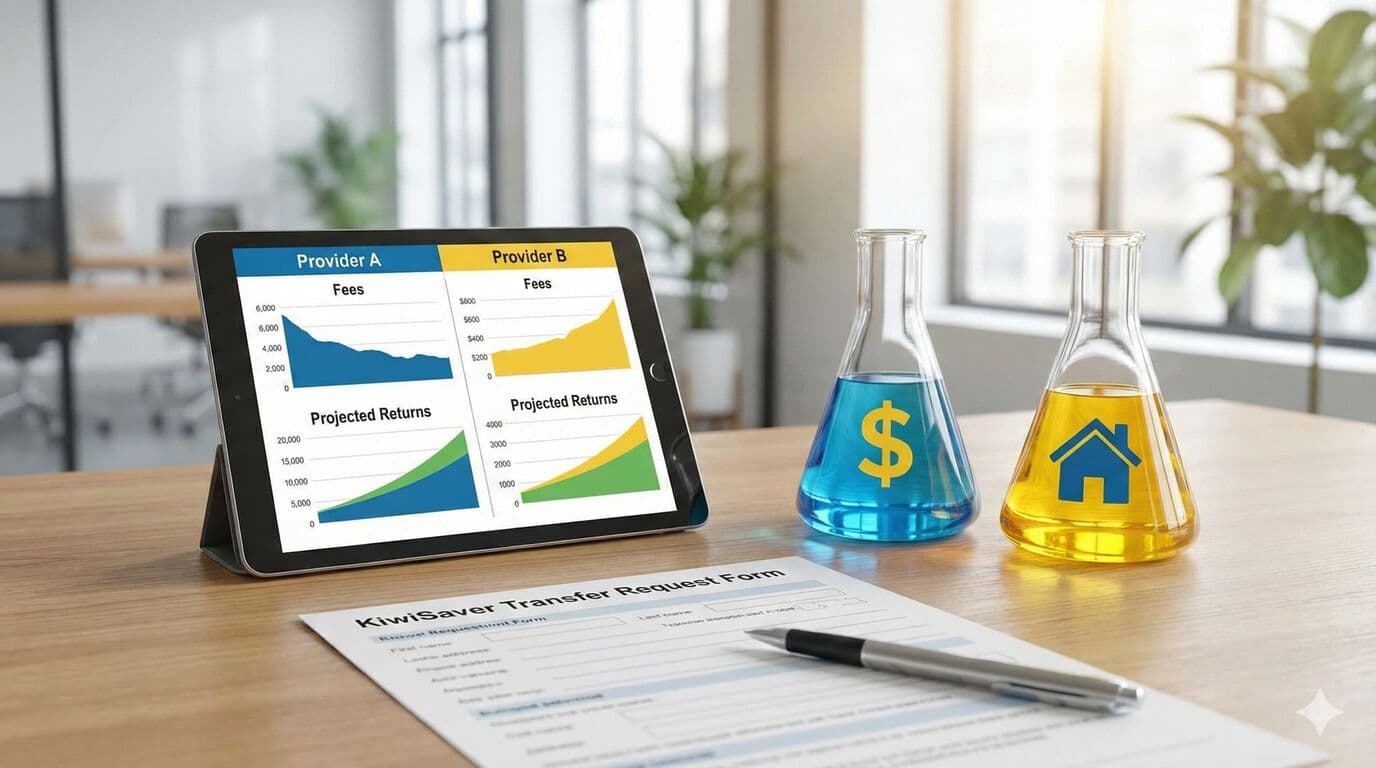
This article is part of Mortgage Lab's "Small Steps" series, focusing on manageable financial housekeeping tasks. While KiwiSaver is often viewed as a "set and forget" investment, keeping your contact details current is essential for maximising your returns and ensuring you don't miss out on valuable benefits.
Why Your Contact Details Matter
Outdated contact information can cost you in several ways:
Missed Government Contributions: The government contributes up to $260.72 per year through the KiwiSaver government contribution as of July 2025. To receive the full amount, you need to contribute at least $1,042.86 annually and earn under $180,000. If your provider cannot reach you about contribution shortfalls, you might miss out on free money.
Incorrect Tax Rate (PIR): Your Prescribed Investor Rate determines how much tax you pay on investment returns. If your income changes and you don't update your PIR, you could be paying too much tax-or facing a surprise tax bill later.
Important Fund Updates: Providers regularly communicate about fund performance, fee changes, investment option updates, and regulatory changes. Missing these updates means making decisions with incomplete information.
First Home Withdrawal Issues: When you're ready to use your KiwiSaver for a first home purchase, incorrect details can delay the withdrawal process at a critical time.
The PIR Problem: Are You Paying the Right Tax Rate?
Your Prescribed Investor Rate should match your current income level:
| Annual Income | Correct PIR |
|---|---|
| $0 - $14,000 | 10.5% |
| $14,001 - $48,000 | 17.5% |
| $48,001+ | 28% |
Many people set their PIR when they joined KiwiSaver years ago and never updated it. If your income has changed significantly-particularly if it's decreased-you might be overpaying tax on your investment returns.
Unlike overpaid PAYE tax, you can't get a refund on overpaid PIR tax. But you can update your rate to pay the correct amount going forward.
Do You Even Know Who Your Provider Is?
This is more common than you might think. Approximately 40% of New Zealanders don't know where their KiwiSaver funds are held. This often happens when you were auto-enrolled into a default provider when KiwiSaver became mandatory for new employees, when you changed jobs and forgot which provider you selected, or when someone else such as a parent, employer, or previous adviser set up your account.
Three Ways to Find Your Provider:
How to Update Your Details
Once you know who your provider is, updating your details is straightforward:
Step 1: Contact your provider directly. Most have online portals where you can log in and update information yourself. Otherwise, phone or email their customer service team.
Step 2: Have identification ready. You'll typically need proof of identity (passport, driver's licence, or NZ birth certificate) and proof of address (recent utility bill, bank statement, or government correspondence).
Step 3: Update these key details: your current address (residential and postal if different), email address, phone number, PIR rate (check it matches your current income), and nominated bank account for future withdrawals.
Step 4: Check your contact preferences. Decide whether you want email, post, or both for communications.
While You're There: Other Things to Check
Since you're logging in anyway, take 10 minutes to review:
- •Fund Type: Are you in a fund appropriate for your age and withdrawal timeline? If you're buying a first home soon, a conservative fund reduces volatility risk.
- •Contribution Rate: The default employee contribution is now 3.5%, and you can choose 4%, 6%, 8%, or 10%. A temporary 3% reduction may be available if the higher minimum is unaffordable. Higher employee contributions only mean more employer matching if your employer offers enhanced matching above the compulsory minimum.
- •Fees: What are you paying in fees? This varies significantly between providers. Low fees compound to significant savings over decades.
- •Investment Performance: How has your fund performed compared to similar funds? The Sorted Smart Investor tool lets you compare providers.
Taking It Further: Should You Switch Providers?
If you discover you're in a default fund with high fees or poor performance, you might consider switching providers. This is free to do and you can switch at any time-there's no lock-in period.
However, switching does take 10-35 business days during which your money isn't invested, so don't do it right before you need to make a first home withdrawal.
Make It an Annual Habit
Add a calendar reminder to review your KiwiSaver details once a year-perhaps when you do your tax return or around your birthday. Ten minutes annually can mean thousands of dollars difference over your working life.
If you need help reviewing your KiwiSaver settings or aren't sure whether you're in the right fund, talk to a KiwiSaver adviser. It's a small step that can make a significant difference to your retirement savings.
Need Help With Your KiwiSaver?
Our expert advisers are here to guide you through every step of your KiwiSaver journey. Get in touch for a free, no-obligation consultation.
Talk to an Adviser