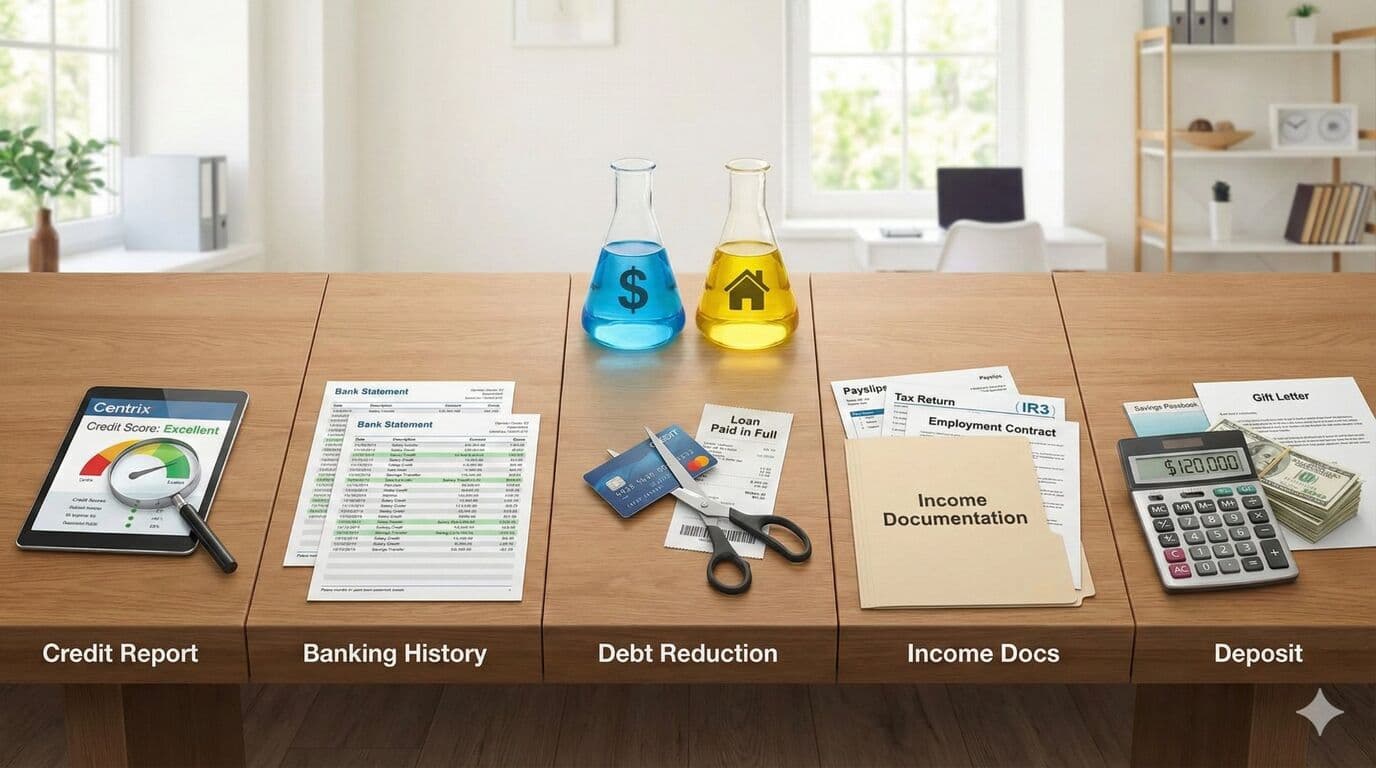
Getting your documentation sorted before applying for a mortgage is one of the most important things you can do to speed up the process. A complete, well-organised application can be pre-approved in 3 to 5 working days, while an incomplete one can drag on for weeks or, worse, be declined entirely. Banks evaluate four key factors: identity, income, bank behaviour, and proof of deposit. Here is exactly what you need for each.
1. Identity Documents
You need to prove who you are with primary identification such as a valid passport or driver's licence, secondary identification like a birth certificate, citizenship certificate, or residency visa, and proof of address through a recent utility bill, bank statement, or government letter showing your current address. Both applicants need to provide ID if you are applying as a couple.
2. Income Documentation
This is where documentation requirements vary significantly depending on how you earn your income.
PAYE Employees
If you are a PAYE employee, you need your three most recent payslips (consecutive ones showing gross income and deductions), an employment confirmation letter from your employer stating your role, salary, and employment type, evidence of bonuses or commission if applicable (a letter from your employer confirming typical amounts), and your last year's summary of earnings from IRD (myIR).
Self-Employed
Self-employed applicants need two years of accountant-prepared financial statements including profit and loss and balance sheet, two years of tax returns (IR3), GST returns for the past 12 months, business bank statements for 3 to 6 months, and an accountant's letter confirming your income and business viability. Banks use net profit (not gross revenue) for lending calculations, so discuss with your accountant how to present your financials.
Contractors
Contractors need their current contract showing terms, rate, and duration, along with recent invoices from the past 3 to 6 months, an accountant's letter confirming average income, and tax returns and financial statements as described above.
Variable Income (Commission, Overtime, Bonuses)
If you earn variable income such as commission, overtime, or bonuses, you need two years of payslips or payment summaries showing consistency and an employer letter confirming typical variable income. Banks often use an average or may discount variable income by 20 to 50 percent.
3. Bank Statements
Banks want to see how you manage money. You need three months of spending account statements showing everyday transactions, three months of savings account statements showing deposit accumulation, and credit card statements if you have any cards.
What banks look for includes consistent saving behaviour, bills paid on time, and absence of red flags. Red flags include gambling transactions, frequent Buy Now Pay Later purchases, and unexplained large cash withdrawals. Any of these can raise concerns about your financial management.
4. Deposit Documentation
You need to prove where your deposit is coming from. For KiwiSaver, provide a statement from your provider plus a withdrawal eligibility letter. For personal savings, provide bank statements showing the funds and their source. For a gift from family, you need a formal gifting declaration signed by the donor stating the money is a non-repayable gift with no expectation of repayment. For overseas funds, provide evidence of source and transfer documentation. If you have received a gift, the bank may also want to see the donor's bank statement showing the funds leaving their account.
5. Additional Documents (If Applicable)
Depending on your situation, you may also need property documents such as the sale and purchase agreement, auction pack, or building contract. If purchasing through a trust, you need the trust deed. You may need your student loan balance from myIR. For investment property purchases, provide a rental appraisal, existing tenancy agreements, and property manager details. If you have overseas income, provide tax returns and proof of continuing income.
Common Mistakes to Avoid
Incomplete payslips are a common mistake, so make sure yours show employer name, pay period, gross income, and deductions. Outdated statements cause delays since banks want documents from the last 90 days. Unsigned declarations are another issue since gifting declarations must be signed by the donor. Drip-feeding documents is problematic because each missing piece delays your application, so submit everything at once. Finally, never hide debt since banks will find it anyway, and non-disclosure is a serious red flag that can derail your application.
Organised Applicants Get Approved Faster
A complete application demonstrates that you are organised, prepared, and a low-risk borrower. Take the time to gather everything before you apply, and you will be in a much stronger position to secure approval quickly.
Need Help With Your Mortgage?
Our expert advisers are here to guide you through every step of your mortgage journey. Get in touch for a free, no-obligation consultation.
Talk to an Adviser