Back to Blog

What Happens When You Buy a House in New Zealand?

21 February 202510 min readBy Jarrod Kirkland
What Happens When You Buy a House in New Zealand?

Key Takeaways

  • 1Get pre-approval before falling in love with properties-it confirms how much banks will lend you.
  • 2Complete due diligence including LIM report, building inspection, and title check before making offers.
  • 3Complete KiwiSaver withdrawal paperwork at least 10 days before settlement.
  • 4After settlement, keep your broker informed for future refixing, restructuring, or top-ups.

Buying a house for the first time isn't just a financial step-it's an emotional rollercoaster. Here's your spoiler-free guide to the full home buying journey.

Buying a house for the first time isn't just a financial step-it's an emotional rollercoaster. Whether you're cautiously optimistic or just want to know exactly what lies ahead, here's your spoiler-free guide to the full home buying journey. No nasty surprises.

Step 1: Get Pre-Approval from the Bank

Before you start falling in love with character villas or attending every auction in town, you need a mortgage pre-approval.

Pre-approval is a written offer from a bank confirming how much they're willing to lend you. Most pre-approvals are conditional-meaning the bank will lend you the money, but only if certain criteria are met (like verifying your income or deposit source). If all conditions are cleared, it becomes unconditional. Learn more about what your Letter of Offer contains.

Pre-approvals usually last 60–90 days. You can renew them, but it's best to start looking seriously once it's in place.

What Do You Need for Pre-Approval?

You'll need proof of deposit such as savings, KiwiSaver, or gifting from family (note: you can't borrow your deposit from a finance company). You'll also need proof of income including payslips, financial statements, and even flatmate income in some cases. Banks will also run a debt check and factor in existing debt when assessing your affordability. You may also be eligible for KiwiSaver withdrawal or the First Home Loan scheme. Your mortgage adviser can help you pull these together.

Step 2: Make an Offer on a Property

Start house-hunting

Once pre-approved, it's time to hit those open homes (slip-on shoes recommended). Explore your options: new builds, existing homes, apartments, or mortgagee sales. Each has its own pros, cons, and quirks.

Do your homework

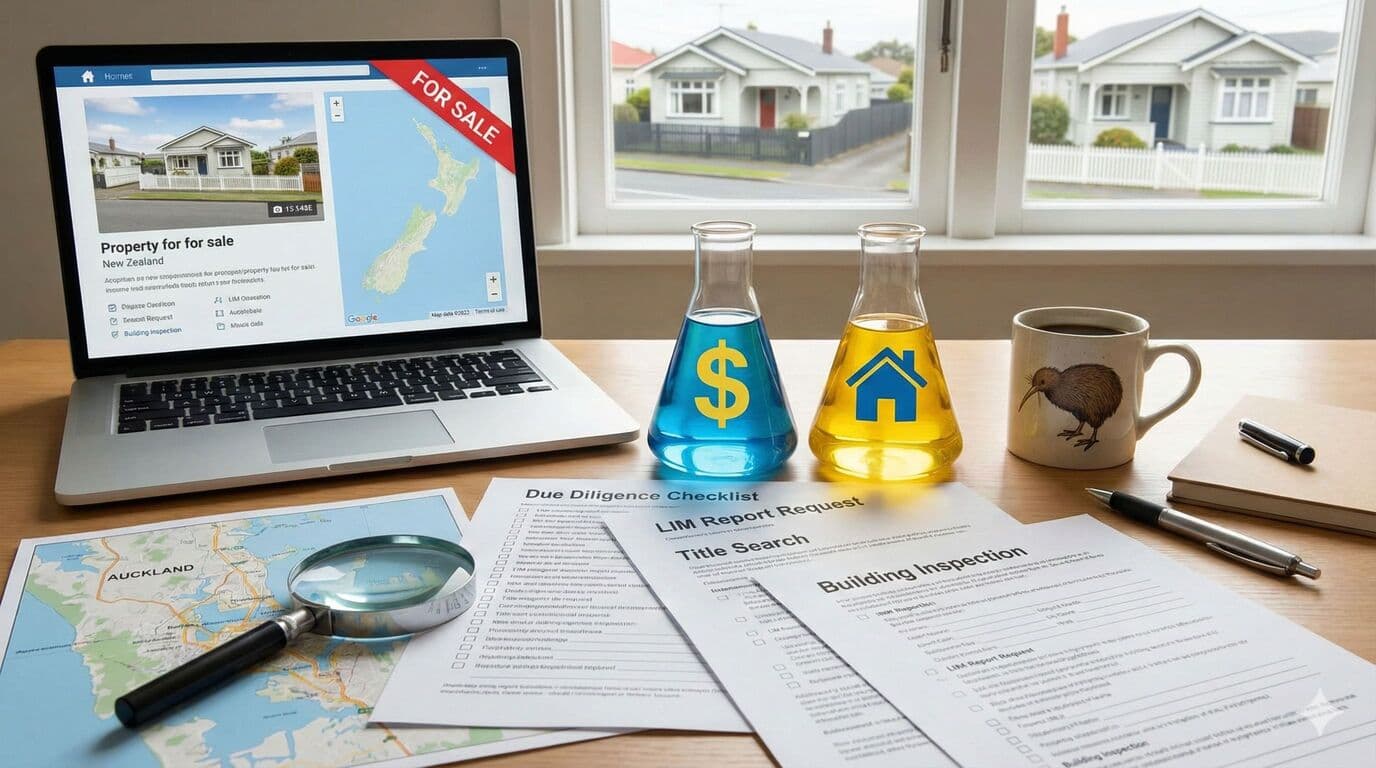
Found a place you love? Now it's due diligence time. Order a LIM report and/or building inspection, check the property title for easements, covenants or cross-leases, review the Sale and Purchase Agreement, and ask your lawyer to review all documents before signing.

Conditional vs Unconditional Offer

Based on your due diligence and your bank's requirements, you'll decide whether to make a conditional offer (subject to finance, inspections, etc.) or an unconditional offer (where you commit no matter what). Note: All auction bids are unconditional.

Offer accepted? Time to pay the deposit

Congratulations! If your offer is accepted and it's unconditional, you'll need to pay the deposit straight away-usually 10%. It's non-refundable. If your offer was conditional, the deposit is due once conditions are satisfied.

Step 3: Prepare for Settlement

Once you've gone unconditional, the countdown to settlement day begins.

In the first steps after going unconditional, provide your lawyer with your IRD number and photo ID, arrange home and contents insurance, and consider life and health insurance just in case the unexpected happens.

Two weeks out, complete your KiwiSaver withdrawal paperwork (at least 10 days before settlement) and meet with your mortgage adviser to confirm mortgage structure and interest rates.

One week out, meet with your lawyer to sign your loan documents and the bank will open your accounts.

Two days out, do a pre-settlement inspection, transfer any cash contribution to your lawyer, and chill the champagne (essential).

Step 4: Settlement Day

On settlement day, your lawyer sends the funds to the seller's lawyer. Once confirmed, the agent hands over the keys. That's it-you officially own your home!

After Settlement

You're a homeowner now! A few final tasks remain. Double-check your mortgage account is set up correctly and keep your broker in the loop for fixing new rates in future, restructuring your mortgage, applying for top-ups for renovations, and planning your next purchase whether home or investment.

Welcome to the property ladder-your journey has just begun.

Need Help With Your Mortgage?

Our expert advisers are here to guide you through every step of your mortgage journey. Get in touch for a free, no-obligation consultation.

Talk to an Adviser


Frequently Asked Questions

What is the difference between conditional and unconditional offers?

A conditional offer is subject to finance, building inspections, or other requirements being satisfied before you are committed. An unconditional offer commits you to the purchase no matter what, with no way to back out. All auction bids are unconditional, so you must have finance and due diligence sorted beforehand.

When do I pay the deposit?

If your offer is unconditional, the deposit (usually 10%) is due immediately upon acceptance and is non-refundable. For conditional offers, the deposit is due once all conditions are satisfied. Ensure you have funds available to transfer promptly when required.

How long does pre-approval last?

Pre-approvals usually last 60-90 days and can be renewed if you have not found a property yet. Start looking seriously once pre-approval is in place, as it confirms [how much banks will lend](/blog/how-much-deposit-do-you-need-to-buy-your-first-home) and gives you confidence when making offers.

What due diligence should I complete before making an offer?

Before committing to a property, order a LIM report from the council and arrange a building inspection. Check the property title for easements, covenants, or cross-lease complications. Have your lawyer review the Sale and Purchase Agreement before you sign anything.

Can I use my KiwiSaver to buy a house?

Yes, eligible first home buyers can withdraw their [KiwiSaver funds](/blog/kiwisaver-first-home-withdrawal-complete-guide) for a deposit. Complete the withdrawal paperwork at least 10 days before settlement to ensure funds arrive in time. Your mortgage adviser can help you navigate the eligibility criteria and timing.

What happens on settlement day?

On settlement day, your lawyer sends the purchase funds to the seller lawyer. Once the transfer is confirmed, the real estate agent hands over the keys and you officially own your home. Make sure your insurance is in place from settlement day.

What should I do after I buy my first home?

After settlement, verify your mortgage account is set up correctly and keep your broker informed for future rate refixing, [refinancing](/blog/when-is-the-right-time-to-refinance-your-mortgage), or applying for top-ups for renovations. Monitor interest rate changes and the [OCR](/blog/official-cash-rate-ocr-explained) to plan your mortgage strategy.

What is a LIM report and why do I need one?

A LIM (Land Information Memorandum) is a council report detailing everything on file about a property, including consents, drainage, and potential hazards. It reveals issues that may not be visible during an inspection. Always obtain one before making an unconditional offer.

Disclaimer

The information on this website is for general guidance only and does not constitute financial or investment advice. Always do your own research and seek personalised advice from a qualified financial adviser or mortgage adviser before making financial decisions. All investments carry risk and past performance is not indicative of future results.

Get the Mortgage Lab App

Access all our articles, calculators and tools on the go. Free on the App Store.

Download on the
App Store

Find an Adviser Near You

We can process your mortgage from anywhere in New Zealand using video meetings. If you don't live in one of these areas, simply choose any region to find an adviser.