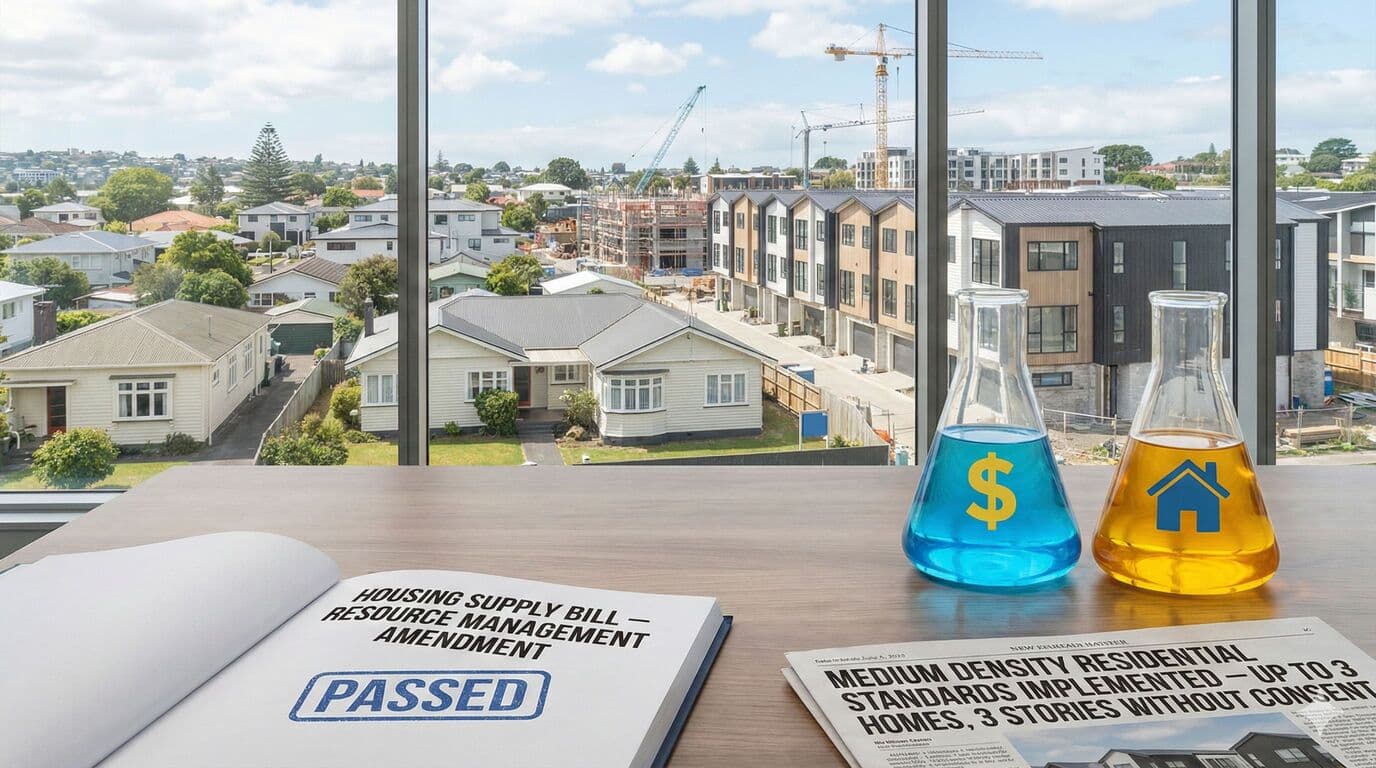
The Resource Management (Enabling Housing Supply and Other Matters) Amendment Act passed into law in December 2021, representing a rare collaborative effort between Labour and National parties to address housing shortages. The Medium Density Residential Standards (MDRS) came into effect in August 2022, fundamentally changing what can be built in urban residential zones.
What the Legislation Changed
The Act targeted "tier 1 urban environments"—Auckland, Hamilton, Tauranga, Wellington, and Christchurch—by removing barriers to medium-density development. The Medium Density Residential Standards allow up to three homes of three storeys on up to 50% of a site without resource consent.
An Intensification Streamlined Planning Process accompanied these changes, requiring councils to update their district plans to enable higher density. Tier 2 cities faced similar requirements where acute housing needs were identified.
Impact Since Implementation
Since the MDRS took effect in August 2022, the legislation has enabled significant new development capacity across major cities. PwC consultants originally estimated between 48,000 to 105,000 new builds over 5-8 years. The actual uptake has varied by location and market conditions.
The legislation has changed the character of many residential areas, with townhouse developments replacing standalone homes on larger sections. This has been controversial in some neighbourhoods but has improved housing affordability and choice in areas where development has occurred.
Current Relevance
The MDRS remains in effect and continues to shape property development and values. When purchasing property, consider whether the site has development potential under these rules—this can affect both value and the character of the neighbourhood over time.
Need Help With Your Mortgage?
Our expert advisers are here to guide you through every step of your mortgage journey. Get in touch for a free, no-obligation consultation.
Talk to an Adviser