What's the worst financial decision you can make? It's not buying a fancy car or taking an expensive holiday. It's not even holding too much credit card debt (though that's bad too).
The worst financial decision is opting out of KiwiSaver when you have an employer willing to match your contributions. Here's why-and how the numbers work.
The Free Money You're Walking Past
Unless your employment contract specifies a "Total Remuneration Package," your employer must match your KiwiSaver contributions up to 3.5% of your salary (from 1 April 2026). This is money they'll pay on top of your wage-but only if you're contributing.
If you're not in KiwiSaver: You get nothing extra.
If you're in KiwiSaver at 3.5%: You get an additional 3.5% from your employer (minimum from April 2026, before ESCT).
This isn't a discount or a benefit that costs you something elsewhere. It's genuinely free money-the closest thing to a guaranteed 100% return you'll ever find.
The Maths: What You Actually Get
Let's break down what employer matching means for a typical salary:
| Annual Salary | Your 3.5% Contribution | Employer 3.5% (after ESCT) | Government Contribution | Total Annual Additions |
|---|---|---|---|---|
| $50,000 | $1,500 | ~$1,225 | $261 | ~$2,986 |
| $70,000 | $2,100 | ~$1,715 | $261 | ~$4,076 |
| $100,000 | $3,000 | ~$2,450 | $261 | ~$5,711 |
Your $1,750 contribution becomes more than $3,000 before any investment returns are applied, with the employer also contributing 3.5% before ESCT. That's still almost doubling your money from day one.
Long-Term Compounding: The Really Scary Numbers
The true cost of opting out becomes clear when you project forward.
Scenario: 30-year-old earning $70,000, contributing 3.5%
| Age | Your Contributions (Cumulative) | Total KiwiSaver Balance (at 7% return) |
|---|---|---|
| 35 | $10,500 | ~$25,000 |
| 45 | $31,500 | ~$105,000 |
| 55 | $52,500 | ~$260,000 |
| 65 | $73,500 | ~$530,000 |
You contribute $73,500 over 35 years. You end up with approximately $530,000. That's roughly a 7x multiplier on your personal contributions.
If you opted out? You'd have... nothing. Zero. The employer contributions, government contributions, and investment returns simply don't exist for you.
The difference isn't marginal-it's life-changing. It's the difference between a comfortable retirement and struggling on NZ Super alone.
Rate Changes: 2026 and 2028
KiwiSaver contribution rates are increasing:
| Date | Default Employee Rate | Employer Matching |
|---|---|---|
| From 1 April 2026 | 3.5% | 3.5% |
| 1 April 2028 | 4% | 4% |
These increases mean even more free money from employer matching-but only for those enrolled and contributing.
For younger workers: From April 2026, employers must make KiwiSaver contributions for 16-17 year olds, opening up employer matching earlier for the next generation.
"But I Can't Afford 3.5%"
This is the objection people raise. And sometimes it's genuine-some households truly have no margin between income and essential expenses.
But often, "I can't afford 3.5%" actually means "I haven't prioritised this."
Let's reality-check 3.5% of income:
| Salary | 3.5% Monthly Contribution | Equivalent To |
|---|---|---|
| $50,000 | $146/month | 2-3 coffees/week |
| $70,000 | $204/month | 1 takeaway dinner/week |
| $100,000 | $292/month | 1 streaming subscription + 2 takeaways/week |
The contribution comes out before you see your pay. After a few weeks, you don't notice it's gone. But in 35 years, you'll definitely notice the difference.
If you're genuinely struggling, you can apply for a temporary reduction to 3% if needed - apply through your provider.
If Your Employer Matches More Than 3.5%
Some employers offer enhanced matching-4%, 5%, or even 6%. If you have this benefit and you're not maximising it, you're leaving even more money on the table.
Example: If your employer matches up to 6%, contributing only 3.5% means you're missing out on additional free money each year.
Check your employment contract. If enhanced matching is available, increase your contribution rate to capture it all. Use our KiwiSaver calculator to see what the numbers mean for you.
What About Using KiwiSaver for a First Home?
KiwiSaver isn't just for retirement. You can withdraw most of your balance (leaving $1,000) for your first home purchase after being a member for at least three years.
Those employer contributions? They come with you. The government contributions? They come too. The investment returns? All yours.
Opting out doesn't just hurt your retirement-it hurts your ability to buy a home.
The Opportunity Cost of Opting Out
Every year you're not in KiwiSaver with employer matching, you're making a decision that costs you:
- •3.5% of your salary in employer contributions (the current minimum from 1 April 2026, rising to 4% from April 2028)
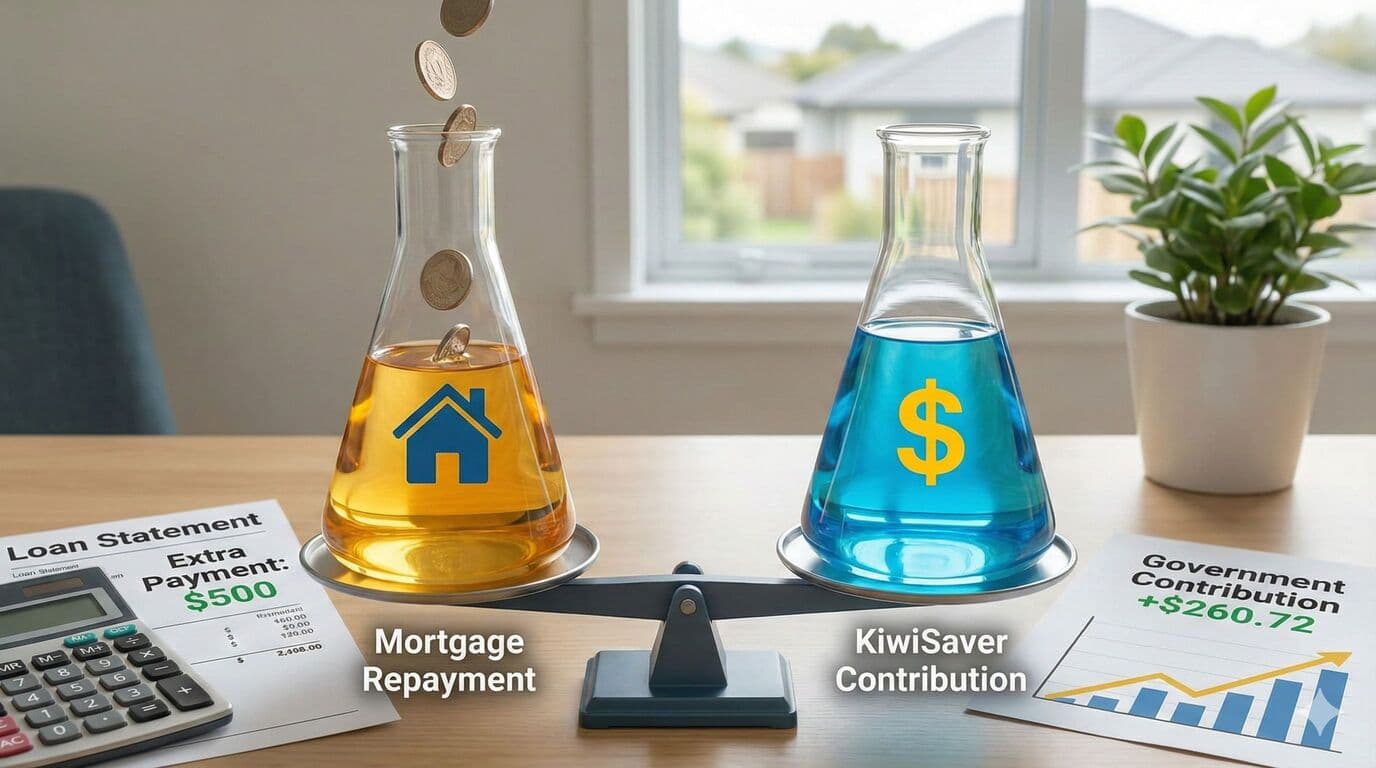
- •Up to $261 in government contributions (if earning under $180,000)
- •Investment returns on both
10 years opted out on a $70,000 salary? You've missed approximately $20,000 in employer contributions alone-before investment returns. That's a house deposit you'll never have.
What If You're Self-Employed?
Self-employed people don't get employer matching-there's no employer. But you still get the government contribution of up to $261/year if you contribute at least $1,042.86 and earn under $180,000.
It's not as powerful as employer matching, but it's still a ~25% return on your first $1,042.86 contribution each year. Where else can you get that?
Don't Leave Free Money on the Table
Opting out of KiwiSaver when you have access to employer matching is the worst financial decision you can make. It's not dramatic or exciting-it's a slow, quiet erosion of your future wealth.
The fix is simple:
Need Help With Your KiwiSaver?
Our expert advisers are here to guide you through every step of your KiwiSaver journey. Get in touch for a free, no-obligation consultation.
Talk to an Adviser