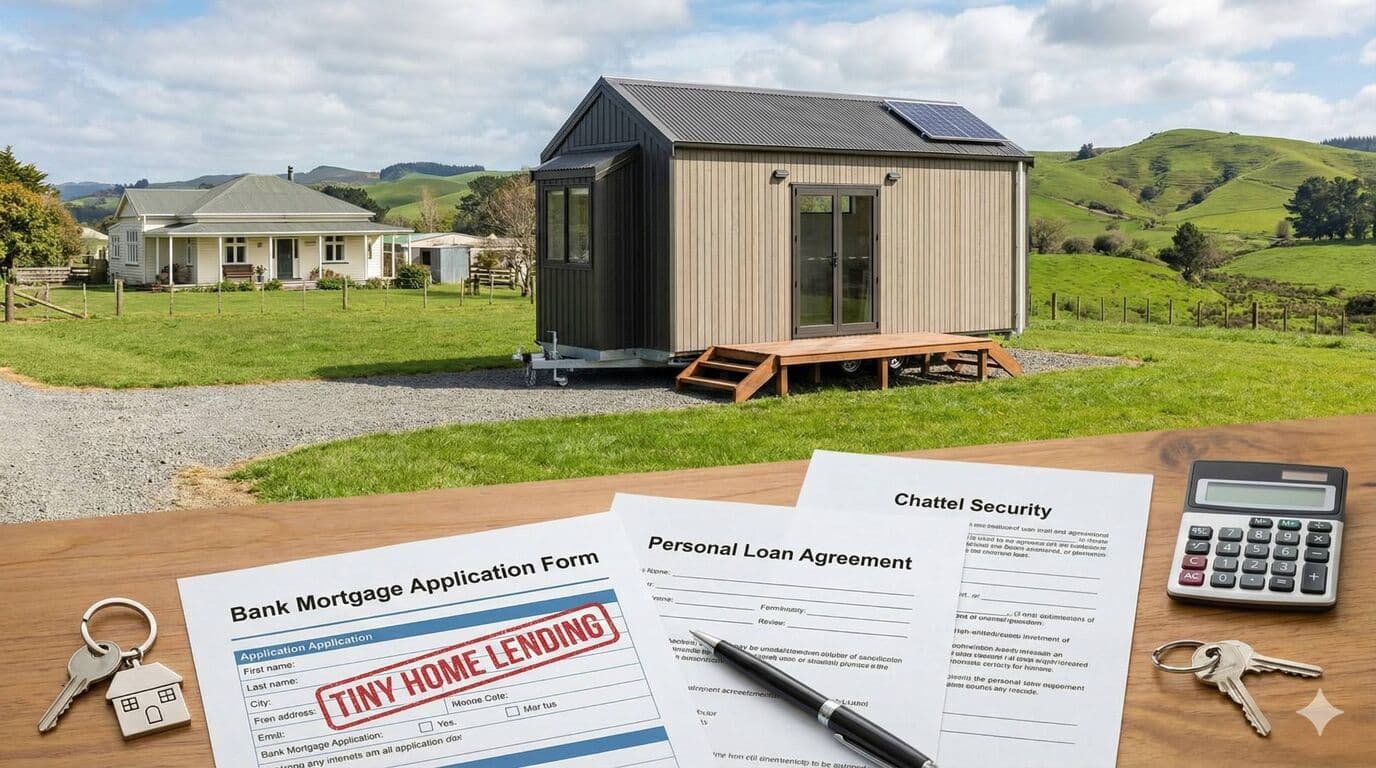
Tiny homes have gained popularity in New Zealand, but financing them presents unique challenges. Traditional mortgage structures don't always fit these properties.
The Classification Problem
Banks categorize lending by property type. Tiny homes often fall outside standard residential categories, particularly if they're moveable or not permanently fixed to land.
Land-Based Tiny Homes
Tiny homes permanently affixed to owned land have the best financing options. They're treated similarly to standard residential property, though valuations may be challenging due to limited comparable sales.
Leased Land Situations
Tiny homes on leased land face more restrictions. Without land ownership, traditional mortgages aren't available. Personal loans or specialized lenders become the primary options.
Moveable Tiny Homes
Transportable tiny homes are typically classified as chattels rather than real property. Standard mortgage finance doesn't apply-alternative financing through personal loans or chattel mortgages may be available.
Valuation Challenges
Even for financeable tiny homes, valuations prove difficult. Few comparable sales exist, and some valuers lack experience with these properties. This uncertainty affects how much banks will lend.
Alternative Approaches
Some buyers purchase land with existing financing capacity, then fund tiny home construction through savings or personal loans. Others use construction loans designed for alternative building methods.
Working With Specialists
Tiny home financing requires lenders familiar with non-standard properties. A mortgage broker experienced in alternative lending can identify suitable options and present applications effectively.
Need Help With Your Mortgage?
Our expert advisers are here to guide you through every step of your mortgage journey. Get in touch for a free, no-obligation consultation.
Talk to an Adviser